Negative Tides

Negative Tides

When you fish on Florida’s Gulf Coast, you encounter both diurnal tides – one high and one low per day- and semidiurnal tide – two highs and two lows a day. Took me some time to get use to. But the oddest tides on Florida’s Gulf Coast are called Negative Tides.

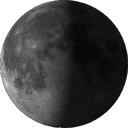
Negative Tides occur mainly during the winter months, around the New and Full moon causing exceptionally low tides. Tide charts note them as minus tides. Days when low tide is lower than you expect, perhaps much lower. These Negative Tides can cause a very real problem for boater. Yeah, you can easily run aground.  But even a kayaker may get a wake-up call. I know it  happened to me. Here’s how that came about.

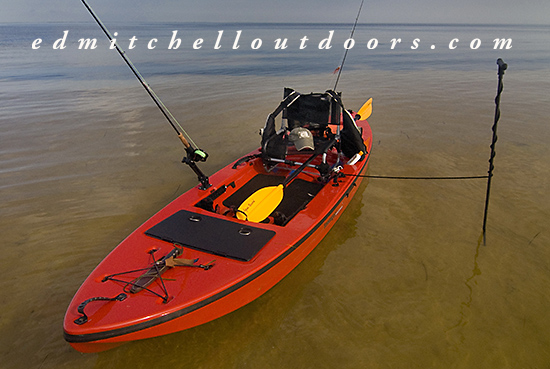
I headed out one morning just after first light to catch the first of the incoming on a favorite flat. Wham my kayak ran around before I got there! Why? Look at the tide chart to the left. On January 21, a low tide arrived about 8am. It was a -57 Negative Tide or about 6 inches lower than normal. A flat holding about 18 inches on low tide will hold only 12 inches. And since flats aren’t perfectly level, some spot may be only 8 inches. But even at 12 inches, you may not be able to paddle effectively. Now for the kicker! Tide charts predict tide, but not the weather. During the prior night, the wind had been steady from the north. And a north wind on the Florida’s Gulf Coast drives water away from shore. Bingo, the flat I wanted to fish had just 2 inches of water on it! Lesson learned.


Posted in Environment, Fly Fishing in Salt Water | Leave a comment

Sea Tow calls Sea Tow

Sea Tow calls Sea Tow

You got to love it. Sometimes Sea Tow calls Sea Tow.

Posted in Uncategorized | 2 Comments

Funnel Clouds Can be Trouble

Funnel Clouds Can be Trouble

A funnel shaped cloud is a sign of rotational winds aloft. Here in the Northeast, funnel clouds are rare. A least in my years outdoors. And they typically don’t last long, a minute or two and gone. Still they deserve your attention. Funnel clouds can be trouble.

Most of them descend from a storm cloud and don’t reach the ground…or the water. But if they do, look out. They may be the making of a tornado or a water spout. Particular if you’re surrounded by a warm air mass, such as in the tropics. Funnel clouds can be trouble. Keep an eye on them.

Posted in Environment, Looking Upward | Leave a comment

Big Flies Weight More

Big Flies Weight More

Big flies are going to weigh more than small flies. Of course, no surprise there. But what are we talking about? In ounces? In grams? Below you see a 9 inch Deceiver and a 3.5 inch Deceiver. Both are made of hair. Okay lets weigh them.

The big fly tipped in at 4 grams. The smaller fly measured o grams! Clearly my scale isn’t sensitive enough to correctly weigh the 3.5 Deceiver. Still you can see that at a minimum  the big fly weighs at least 4 times the smaller one.  Quite a bit.

Posted in Uncategorized | Leave a comment

The Fifty-Fifty Fly Leader

The Fifty-Fifty Fly Leader

While living in Florida I came across a 12 foot leader design called the Fifty-Fifty leader. No idea who created it, but I found it useful…. and you may as well.


The diagram above shows an example of this leader for an 8 or 9 weight fly rod.  It is called the fifty-fifty leader simple because the butt section makes up half the total length. As you can see, it has 6 feet of 40 pound test, followed by 2 feet of 30 pound, 2 feet of 25 or 20 pound, and a 2 foot tippet.  Bingo, 12 feet.

While we are on the subject, allow me to pass along some advise on building leaders. Mixing monofilament brands is rarely wise. Why?  Different brands have different coatings, and when joined together may produce a weak knot.  Moreover, I am not a fan of fluorocarbon, especially knotted to conventional mono. I depend on Maxima Clear for my leaders. It is tough, dependable, and knots extremely well. Love it. And occasional I’ll use Maxima Ultra Green for the tippet. It is more supple.


Posted in Gear | Leave a comment