A Team of Nymphs

A Team of Nymphs

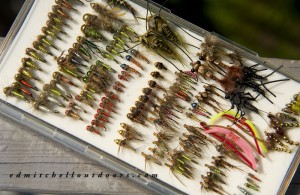
We all know people who strictly fish dry flies. Coconuts. It’s like only eating one kind of food and thinking you are a gourmet. Oh well, let them suffer. Truth is this: you should pick the most effective method for the situation. That’s angling reality folks. And many times, the right choice is a team of nymphs.

A Girdle Bug & Small Nymph

Not long ago, I fished with guide Chris Jackson on Massachusetts’ Deerfield River and guide Owen Ward on Vermont’s White River. And both guides suggested the same rig. A team of nymphs. In fact, the very same two nymphs! On the leader point a size 10# weighted Girdle Bug and on the dropper a small bead-head nymph.

So why this team of nymphs? On big rivers, the Girdle bug serves three purposes  It is large enough to be seen from a distance, in other words trout can find it. It’s presents a big  fat meal. And its heavy enough to get your flies down where the trout live. How about that wee nymph? Well if you encounter trout actively feeding on small insects, the dropper fly fits the bill.


Posted in Flies and Fly Tying, Fly Fishing in Freshwater | Leave a comment

Fran Better’s Wonderful Dry Fly “The Usual”

Fran Better’s Wonderful Dry Fly “The Usual”

The first time I saw Fran Better’s wonderful dry fly -“The Usual” was in his Adirondack Sport Shop on the West Branch of the Ausable River in Wilmington. As far as dry flies go, the fly was nothing fancy, nothing usual. It was sort of rag-a-muffin thing, looking almost a bit unfinished. But trout loved that rag-tag shaggy appearance, especially in fast water.

It gradually became a legend thanks to Fran’s friend Billy Phillips, a highly accomplished musician, who fished it successfully and often in the Adirondacks. Before you knew it the  popularity of Fran Better’s wonderful dry fly spread far and wide.

The Usual is constructed from a single material – fur from the base of the rear foot pad on a snowshoe rabbit. This tough hair is very waterproof and durable. The wing is placed about halfway back on the shank to balance the fly and spread 180 degrees around the shank, making Eric Leiser call it a bit like a Compara dun. The body is the same hair dubbed on the shank.

All told it is a rugged fly and fairly easy to make. Today Fran Better’s wonderful dry fly is typically done in white, yellow or orange. Thread color varies from white to fluorescent red when fishing over Sulphur duns. Hook sizes range from 10 to 16.

Posted in Flies and Fly Tying, Fly Fishing in Freshwater, On the Road | Leave a comment

Fly-Fishing Vermont’s White River

Fly-Fishing Vermont’s White River

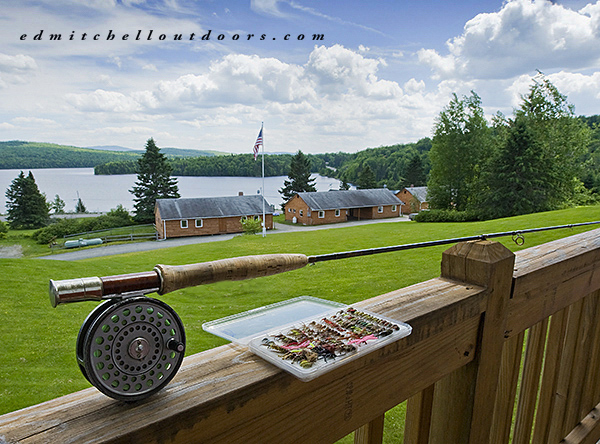
Just returned from a trip to northern Vermont, where I floated the upper main stem of the White River with Owen Ward, head Orvis guide at the Woodstock Inn. Wonderful trip for both stocked and wild trout. The resulting photographs and story will appear in the fall issue of Estuary Magazine!

Posted in Fly Fishing in Freshwater, On the Road | Leave a comment

Observation Bunker at Gay Head

Observation Bunker at Gay Head

Given its Memorial Day, I though this photo might be of interest. It is a concrete bunker built back in the 1940’s as an observation post to watch for Nazi U-boats or planes entering Massachusetts waters. If my memory serves me right, it once resided up in the cliff under the Gay Head Lighthouse. (Now known as the Aquinnah Lighthouse) But erosion caused its to eventually fall to the water’s edge. When? Not sure, but I think it fell some 30 years ago.

Posted in Photography, Uncategorized | Leave a comment

Release Strike Indicator for Stillwater Fishing

Release Strike Indicators for Stillwater Fishing

A couple of posts back, I discussed stillwater fly-fishing for trout. While stillwater fly-fishing can be done with streamers, wet flies and dries, the most common method is nymphing, often with chironomid patterns. Lakes are full of midge larva.

In a stream or river, nymph fishing is typically done under a strike indicator, rarely placed over 3 or 4 feet above the fly. When you go to land a trout, the strike indicator’s position does not interfere with you reaching the fish.  In stillwater, however, the fly may be 8 feet or farther down the leader. Now a convention strike indicator becomes an obstacle when landing the trout.

A release indicator solves the problem. For example, if you feel the stillwater fish are likely ten feet down, you can position a release indictor ten feet up the leader. Now you are fishing at the proper depth. When the strike comes, setting the hook causes the release indicator to side down the leader to the fly. Bingo life is easy. You got to love it!

Posted in Fly Fishing in Freshwater | Leave a comment