Coyote Creek

My buddy Pete is up in the Sangre de Cristo Mountains of New Mexico. I’ve gone through that area and know its a spectacular spot.

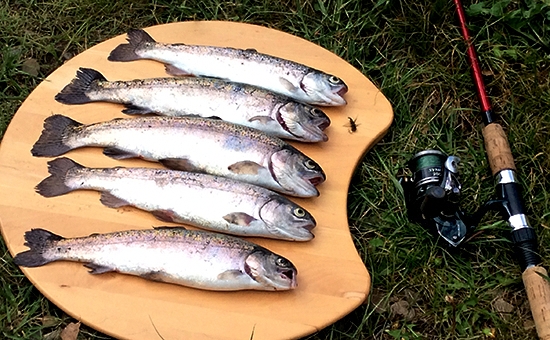
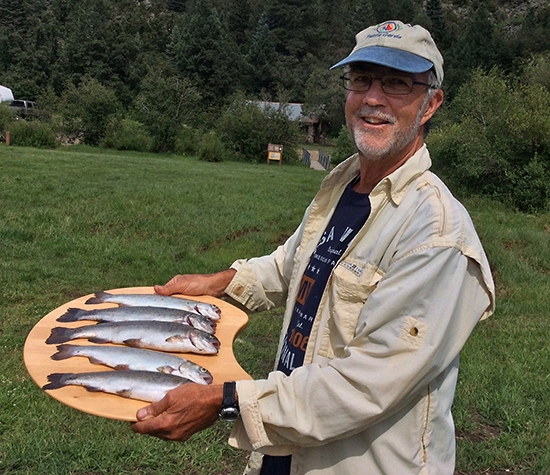
At the moment, Pete, and his wife Linda, have their RV in Coyote Creek State Park, near the little town of Guadalupita. Coyote Creek is heavily stocked with rainbow trout, and he tells me he’s been fishing for them with his spinning rod. Yesterday he ran into a fly-fisherman named Rich working the same waters, and nailing rainbows left and right. Naturally Pete asked what Rich was using.  Rich showed him the fly, gave him one, and told him how to rig it with a float on a spinning rod. Very nice of Rich.

Coyote Creek 2 web

Pete with his rainbows

As soon as Pete switched over to the fly he caught one trout right after the other. Pete’s not sure what the fly is called, but you can see it in the next photograph. Looks to me little like a wooly worm or perhaps a waterboatman imitation. Whatever it is, it worked like magic.

Rainbows with fly

Rainbows with fly


Posted in Fly Fishing in Freshwater | Leave a comment

Joe Brooks – One of the Greatest

A fine new project is underway to document the role Joe Brooks played in the history of fly-fishing. No question, Joe Brooks was one of the greatest anglers to ever pick up the long wand. A masterful caster, he traveled widely, perhaps more so than another angler of his time, wrote often, promoted the sport to many, and constantly broken new ground. No wonder he has been called the father of modern fly-fishing.

Joe Brooks was active in both fresh and saltwater fly-fishing. Still he always found time to help other anglers including Lefty Kreh. My library had nearly all of Joe’s titles, even the harder to find Bermuda Fishing, 1957. In 1948, Joe penned the first book dedicated to largemouth bass on a fly rod. Even more notable, at least from my view point, is his Salt Water Fly Fishing, Putnam, 1950. It is the very first book ever totally devoted to the salt side of the game. Quite an accomplishment.

Salt Water Fly Fishing isn’t a huge volume by today’s standards, but it offered information that encompassed the entire Atlantic coast, from Key West to Maine, from bonefish to striped bass. Furthermore, in the book Joe presents the first series of saltwater fly patterns ever created. (I wrote about them in an article entitled The Upperman Joe Brooks Flies, Fly Tyer magazine, spring 2001) These early flies predate even his well-known Blonde series.

Unfortunately not enough has been written about the man behind the legend. And that is why this new project is so exciting and worthwhile. I urge you to visit the following sites to learn more about the Joe Brooks. You’ll be glad you did!

Website
http://joebrooksdocumentary.com

https://www.facebook.com/JoeBrooksFlyFishing

Twitter
https://www.facebook.com/JoeBrooksFlyFishing


Posted in Fly Fishing in Freshwater, Fly Fishing in Salt Water, Outdoor Writing | Leave a comment

Dr.Slick Long Range Clamps

Fly anglers typically hook fish in the jaw. Nice. So removing the hook is usually an easy task. But the recent snook bite here has been an big exception. These snook are so aggressive that many of them inhale the fly. Hence they are taking the fly so deep, it difficult to extract it without causing damage to the fish. Not good.

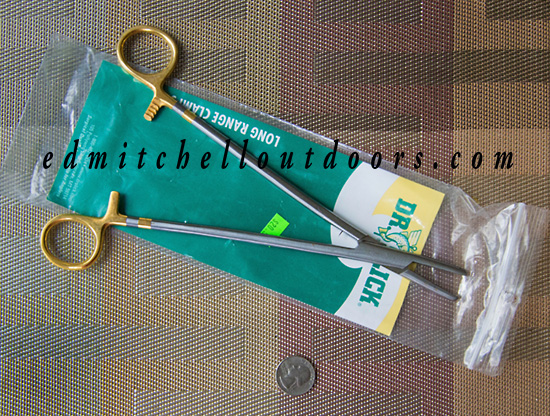
Because of that, I’ve been looking around to replace my standard size forceps with a longer pair, long enough to reach down a snook’s gullet. What I found was a new item from Dr. Slick called their Long Range Clamp.

Dr Slick Long Range Clamps

Dr Slick Long Range Clamps

I’ve used them several times, so let me to offer some initial thoughts. Here we go – a review of Dr. Slick Long Range Clamps. These clamps are indeed long range, measuring 10 inches. They weigh 5.45 ounces. That makes them sturdy, but also a bit heavy. I got them at Bears Den for $20.50.

Honestly, they worked great on the snook, although they are bigger and heavier than I really need. And it is easy to see they will be super for tarpon, sharks, barracuda, especially when landed from a high sided boat. On the flats, these clamps are also handy for unhooking fish you want to avoid handling because of poisonous spines, slime, or teeth. In that regard, I’m using them for critters like catfish, ladyfish, blowfish, leather jacks, and lizard fish. So these clamps are proving quite handy, and I’m glad I got them.

In my experience, Dr Slick products typically tarnish in saltwater, and these clamps are no exception. You’ll want to rinse them off occasionally or expect problems down the road. I’ll report back as these clamps get more wear.

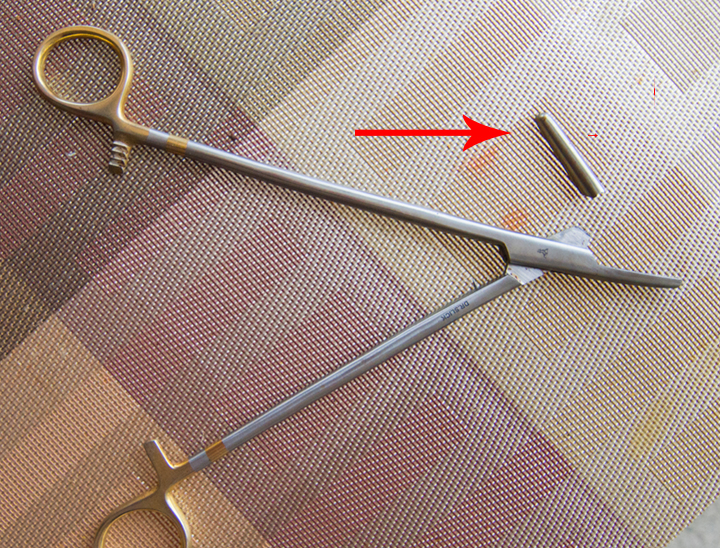
Update  Well I’ve been using this item for over a month now, and I can’t recommend it to you. A few days ago, I removed the clamp from my tackle bag and unlocked them. Immediate half the jaw fell off. Ouch! Apparently the steel used can’t withstand the pressure generated by the long handles. The jaw snapped off cleanly. Too bad. This could have been a handy device. Thankfully Bears Den Fly Shop gave me a refund.

Long Range Clamp 20150908_0564


Posted in Fly Fishing in Salt Water, Gear, Uncategorized | Leave a comment

“Tailing” Snook?

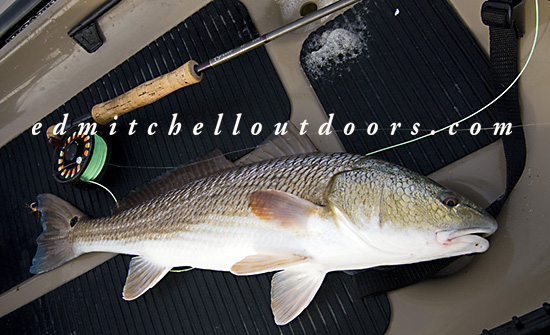
20150601_0474 North Island webSaw something new today. I was fishing the sandbar about two hours into the ebb. The snook action had been fairly good on the bar, but I decided to turn and look inland. About 200 hundred feet away, along the edge of the grass bed, I spotted  a redfish tail waving to me. Great news!

After cutting off the streamer, I dug out a small Crazy Charlie from my pack, and tied it on. Then I waded over quietly. Fortunately for me, the fish remained in place, allowing me to get a good casting angle. As I prepared to cast I notice additional “tails” feeding in the same spot.

Tailing Snook?

Tailing Snook?

My first cast was short, but the second cast landed on the button. Bang! A fish took immediately, and torn off, causing the other fish to rip out of there. I figured I had a nice red, but I was wrong. It turned out to be a 27 inch snook!

Later I told my friend Dave about my “tailing” snook. He informed me that snook sometimes hover near “tailing” reds, hoping to grab anything the reds stir up. Dave calls them “hitchhiker” snook.  Made sense. I’m sure I saw a redfish tail, but what I had not seen was the snook hitching a ride!


Posted in Fly Fishing in Salt Water, Tailing Redfish, Wild Things | Leave a comment

Snook Behavior

Snook, snook,snook, snook, and more snook. Yes, the bite goes on. Double figures days are no problem. Granted, these aren’t big fish, but on light fly gear they are one ripping blast. I’m using a my Scott STS 906/3 with a floating line, a 10 foot leader tapered to 20 pounds (snook cut through 15  in a hurry),  and a 3″, size 1#,  white Lefty’s Deceiver. Farnsworth sliders work well too.
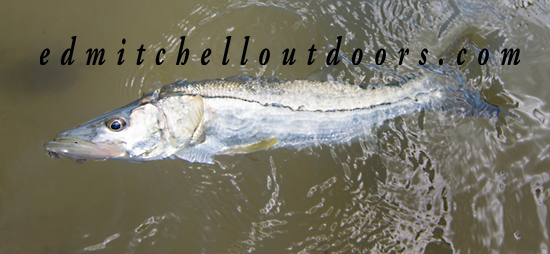
Snook on a Fly

Snook on a Fly

I’ve been fishing this bite for well over a week, and its allowed me to learn a little about snook behavior.

At low tide, these snook hang to the deeper edges, along the outside of the sandbar. These fish are largely untouchable, except perhaps on live bait. So casting a fly to them is mostly a waste of time. Still I give it a try on occasion.

As the tide starts to rise, the snook  slowly slide up on the sandbar. Typically they cruise over the sand in small groups, traveling in random directions. These cruisers are fairly shy. They may track a fly for a short distance, but more likely they will totally ignore it. A few even zoom away from the fly as if it were poison. The only exception I’ve seen is a fly that lands right on a snook’s head. In a few rare cases that sparks an explosive surface strike.

Around the second hour of the flood, a small bit of current forms, flowing over the bar toward the grass beds that hug the inside edge. Now thing are about to change drastically. The snook follow this current over to the grass. Once there they begin to chow with a vengance, whacking any fly that comes their way.

The bottom line seems to be this: Snook are moody. When conditions aren’t in their favor snook can be wary, cautious, or even down right shy. It can be frustrating, believe me. Like many predators, however, snook are very sensitive to a moving tide. When the water flows, snook hear the dinner bell, and put on the feedbag big time.In half an hour’s time they can go from dormant to full-on aggressive.

Consequently, keeping a close eye on the tide chart is essential. And I’ve noticed that the days with stronger tides produce stronger bites. It also pays to follow the lanes of current as they change in size and location during the tide.



Posted in Fly Fishing in Salt Water, Looking Downward, Wild Things | 2 Comments