Cabela’s CGR 7’6″, 7/8-weight, Fly Rod

Part One A few years back Cabela released their line of 50th Anniversary glass fly rods (CGR). At 99 buckeroos the prices were reasonable, so I got one, a 5’9″, 3 piece, 3-weight. It turned out to be a fine little rod and well worth the money. In April of 2011, I reviewed it on this site.

Recently Cabela introduced a new line of fiberglass rods, that resemble the original Anniversary models. That got my attention. Making matters more interesting, Cabela had placed these rods on the market, for a limited time, at 79 bucks each. Remarkable, and irresistible. I had to pick one up.
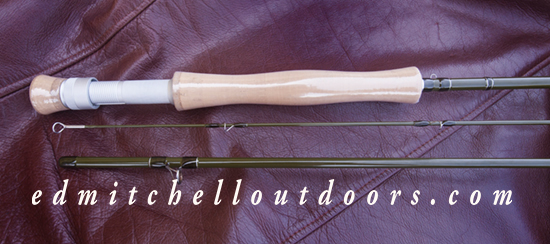
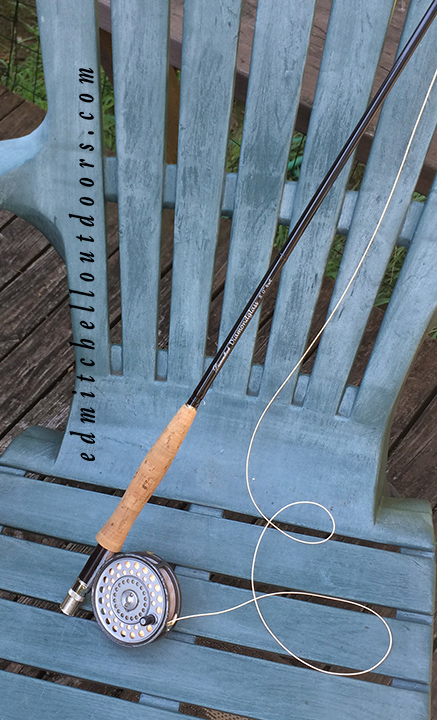
Cabela’s CGR 7/8 Weight Glass Fly Rod

Last time, I chose the smallest rod they offered; this time I took the biggest. It is Cabela’s CGR  7’6″, 7/8 -weight, glass fly rod. So let’s do a review. In this post we’ll look at the basic construction and appearance of the rod. Next time we’ll chuck some line with it.

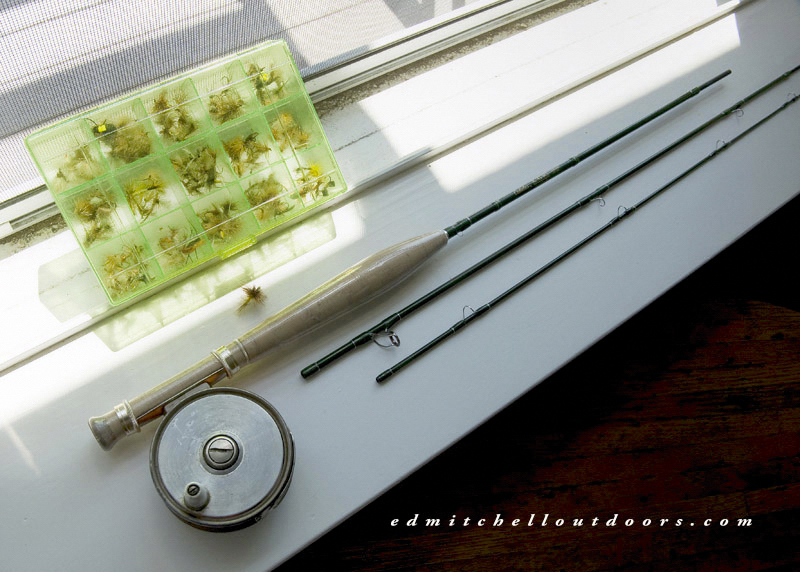
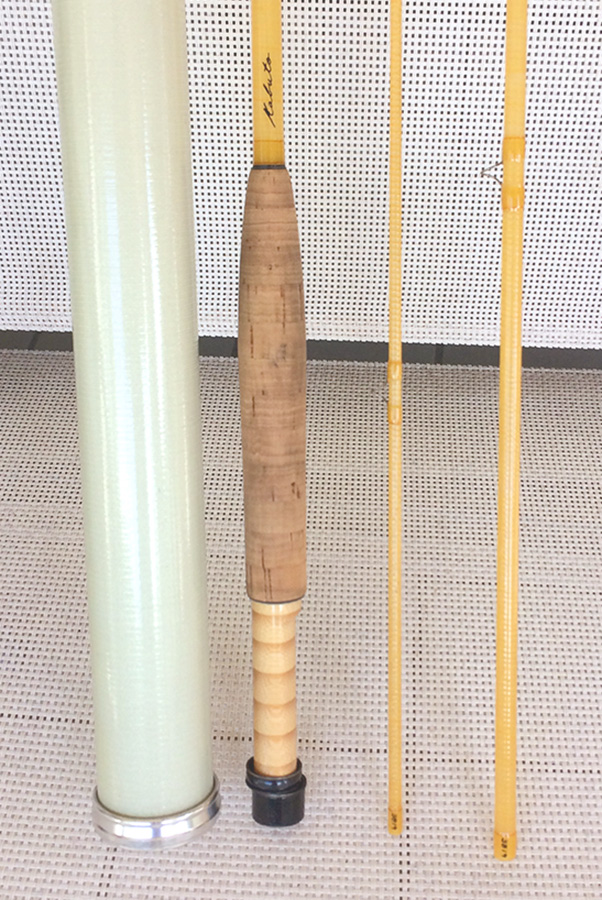
Like the Anniversary models, the 3-piece blank (E Glass) is green and made in China. It weights in at 4.75 ounces, not bad. I don’t have a direct comparison, but this might give you some idea. A typical 9′, 4-piece, graphite, 8-weight would tip in around 4.60 ounces.
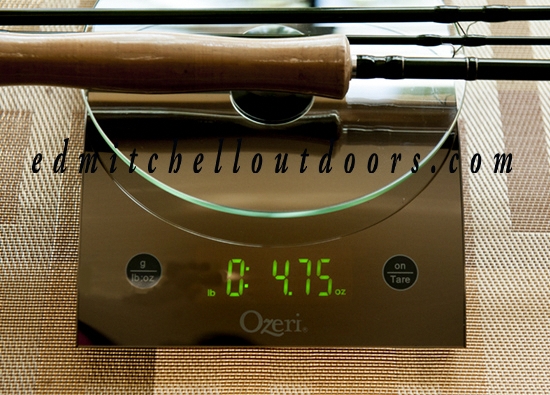
The CGR 7/8-Wt weighs 4.75 ounces

The CGR 7/8-Wt weighs 4.75 ounces

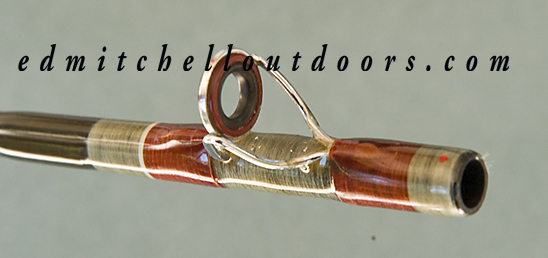
The rod has a single up-locking aluminum reel seat, with an attractive bead-blast finish. It also has a permanent 3/4″ butt extension. The grip is a 7″ full wells. It is properly shaped and the cork seems pretty darn good. There is only one stripping guide, followed by 6 snakes guides and a tip-top. All wraps are black, a few of which are tipped in silver. The rod tube is a grey nylon, and measures 34 1/2″. Which means you’ll likely be able to carry it on most airlines. Sorry, no rod sock, but the tube has an interior divider.

Overall, the rod looks fairly nice, and is light in the hand. And the spigot ferrules (no alignment dots ) fit snugly.  So far I’m impressed, especially given the sweet price.

More Part Two         Part Three
 

Posted in Fiberglass Fly Rods, Fly Rods, Gear | 2 Comments

Back on the Florida Flats

This morning I got back on the Florida flats. It was a beautiful day, with a low tide around 9AM. Wind from the southeast. I wasn’t able to catch many fish, but I saw quite a few. That’s a great sign for the days ahead.

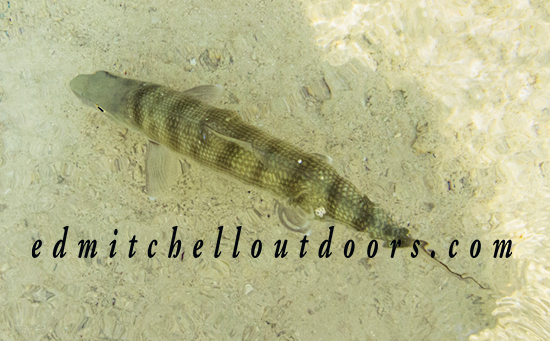
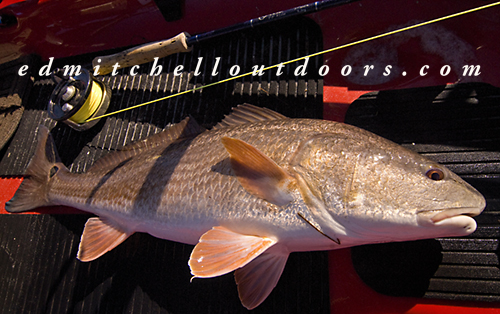
Spotted Sea trout

Spotted Sea trout

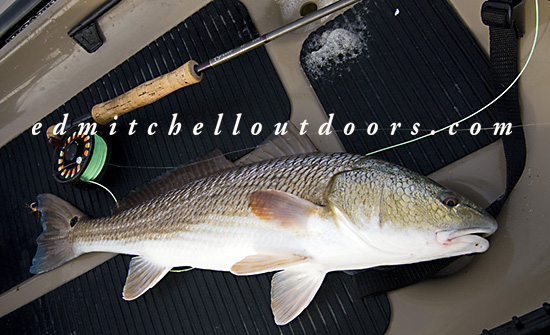
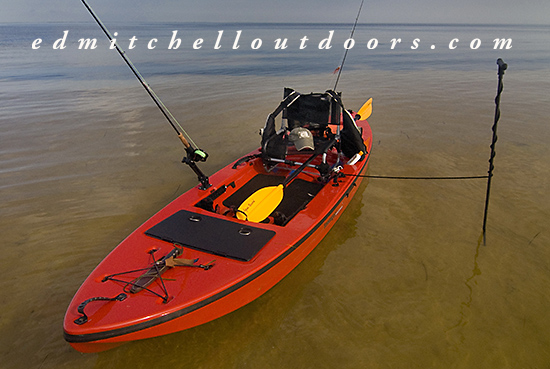
While poling the Adios north, I spooked two schools of reds. Nice sized fish too. Both schools were in the same general vicinity, laid up in skinny water along the sandbar, awaiting the flooding tide. Never even got a chance to cast to either school. That’s fishing.

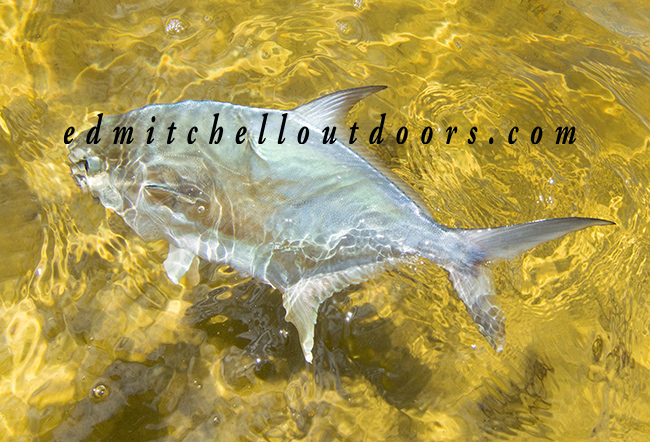
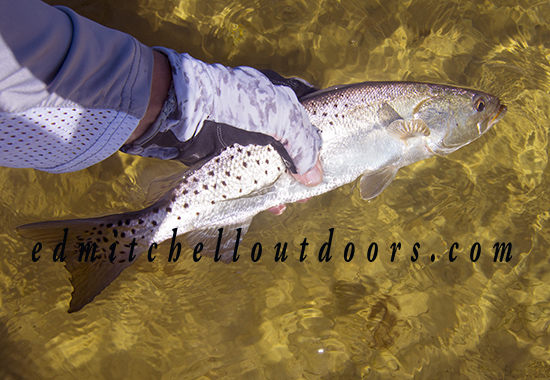
Later I caught and released a nice spotted sea trout. There were plenty of  sheephead around all morning, and I saw a big school of pompano too. Hopefully good days are coming.

Posted in Diablo Adios & Chupacabra, Fly Fishing in Salt Water | Leave a comment

Long Island Bonefishing Lodge

Part 6,  Island Sights

During our stay at the Long Island Bonefishing Lodge, we lost one entire day of fishing to 30 knot winds, courtesy of a wicked cold front that enveloped the southeast Atlantic seaboard, spilled down into Bahamas.

Thankfully the guide commandeered the lodge’s car and took us for a tour of the island. Our first stop was the Long Island Museum in Deadman’s, where the history and culture of the island is on display. It is a small museum, but well-worth seeing.

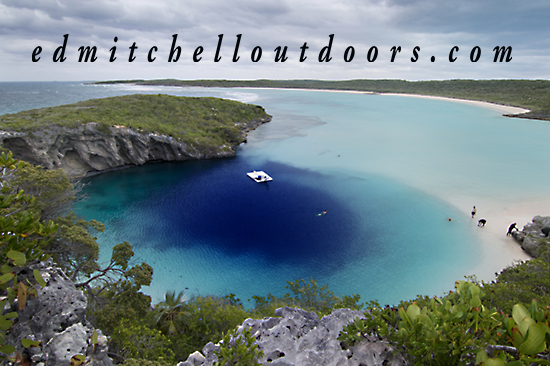
Dean's Blue Hole

Dean’s Blue Hole

On the Atlantic side, south of the settlement of Scrub Hill and north of Clarence Town, we next visited a natural phenomenon know around the world as Dean’s Blue Hole. Dean’s is the world’s deepest blue hole, descending some 663 feet straight down. Like a liquid eye, it gazes up out of the surrounding sand with an intense cobalt stare. It is an amazing sight.

Twice a year the world championship freedivers converge here to test their skill. Long Island legend William Trubridge is one of the very best, having descended to 282 feet without the use of fins. An incredible feat.

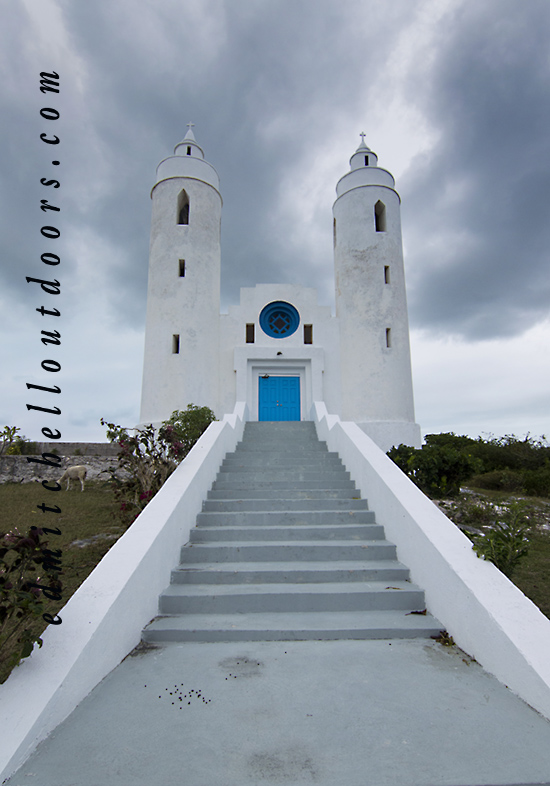
In Clarence Town, the island’s capital, we saw the twin churches of St. Paul’s

St.Peter's & St. Paul's Church

St.Peter’s & St. Paul’s Church

Anglican Church, and Peter’s & Paul’s Catholic Church both designed a hundred years ago by Father Jerome Hawes, who was also a trained architect. Later he moved to nearby Cat Island, where he built a Hermitage on Bahama’s highest point, Mount Alvernia. There he spent his finally 17 years.

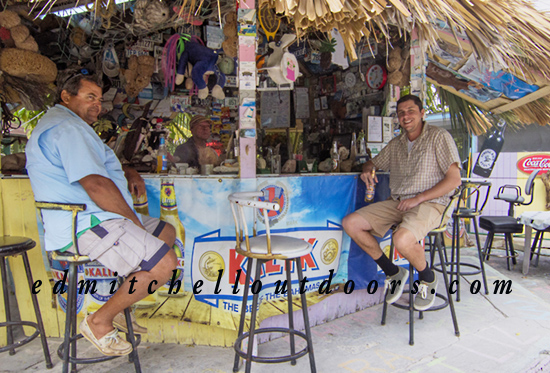
On the ride back, we stopped at Max’s Conch Bar and Grill, one of the most famous bars in the Bahamas. Run by Gary Ritchie (Max) and his wife Liz, this fun zone sits aside the road under a thatched roof with plenty of cold Bahamian beer on hand.

Max's Conch Bar and Grill

Max’s Conch Bar and Grill

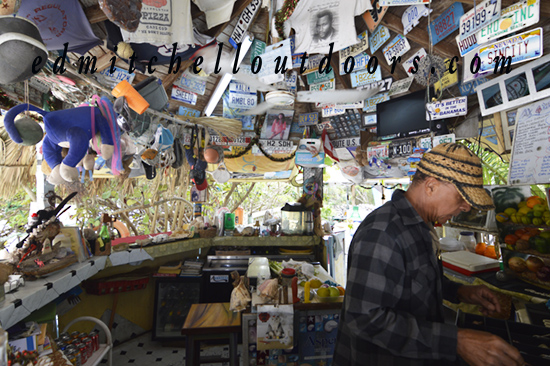
Not interested in a cold Kalik? No problem. Max is adept at mixing up some killer concoctions. One or two of these mysterious libations will have you forgetting your troubles’mon. Along with powerful potions, Max’s is also well-known for serving up good food – ranging from a wide selection of conch dishes, to fish, chicken and jerk pork.

Max at Work

Max at Work

Posted in Bonefishing, Looking Downward, On the Road | 4 Comments

Long Island Bonefishing Lodge

Part 5,    Rods, Lines & Leaders

The Long Island Bonefishing Lodge recommends rods from 7 to 9-weight.  I found a

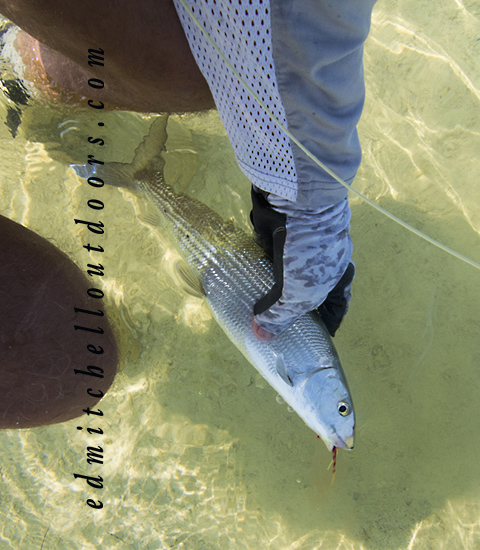
Deadman's Cay Bonefish

A Deadman’s Cay Bonefish

7-weight fly rod to be a great tool, and frankly next time I’ll bring a 6-weight.

Why light fly rods? As long as the wind isn’t howling, a saltwater 6 or 7-weight fly rod has no problem accurately delivering a size 6 or 8 fly. Second, these lighter fly lines make a much gentler presentation. A major plus. And third, given the size of the average bonefish on Deadman’s, these lighter rods are a hoot.

I used Rio Floating Bonefish lines; at no time did I feel the need for an intermediate fly line. My leaders were 12 footers made from Rio Saltwater Hard Mono (a royal pain to knot). They straightened out nicely, even in the wind, which helped with accuracy. My tippet was 32 inches of 1x Seaguar Grand Max Fluorocarbon (awful expensive). At a thin .012″ it tests out at a whopping 18.5 lbs, and worked well.  Was that pricy stuff totally necessary? No, 10 or 12 pound mono will likely suffice.

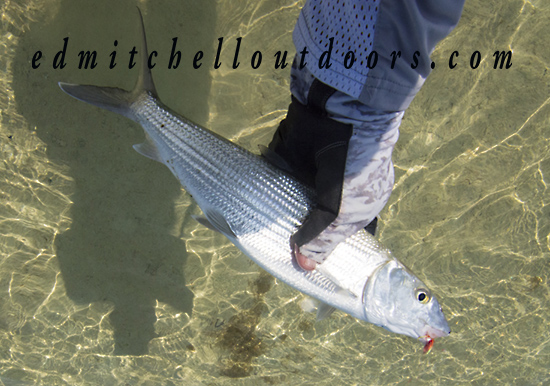
Another Deadman's Cay Bone

Another Deadman’s Cay Bone

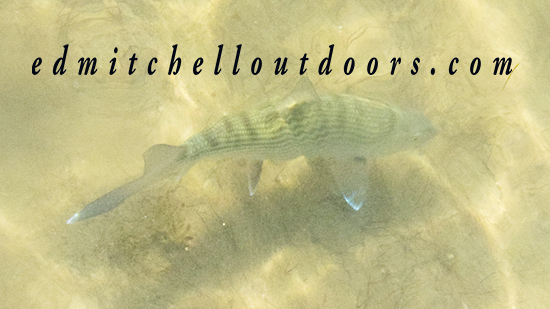
Bonefish are called the “ghost” of the flats for a good reason, but here at Deadman’s Cay they are not that hard to spot, because of the light bottoms and transparent shallow water. Check out the released bone in the next picture. I caught it in water barely covering its back. In following picture you see the difference over a darker bottom.
A Deadman's Cay Bonefish over a white bottom

A Deadman’s Cay Bonefish over a white bottom

A Deadman's Cay Bone over a darker bottom

A Deadman’s Cay Bone over a darker bottom

In Part 6, I’ll tell you a few more things about Deadman’s Cay


Posted in Bonefishing, Fly Fishing in Salt Water | 1 Comment

Long Island Bonefishing Lodge

Part 4,    Flies for Deadman’s Cay

Ok, time to talk flies! But before we dive in, I have a thought for you. While I’m far from the most experienced bonefisherman, I feel confident in saying this: on the flats “presentation” is king, fly pattern is queen.  That doesn’t mean fly patterns are unimportant, only that your ability to deliver a fly accurately, softly,  and on time, is far more important. Enough said.

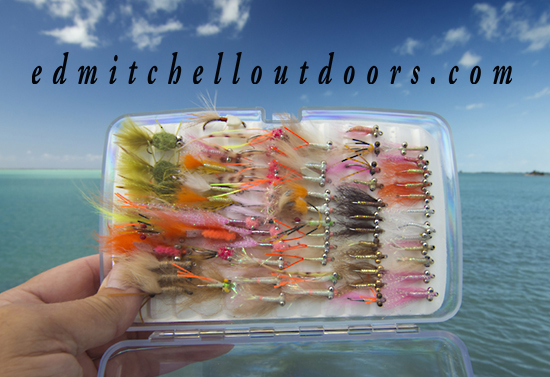
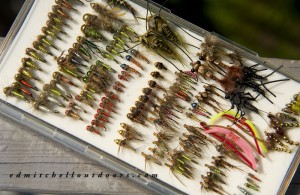
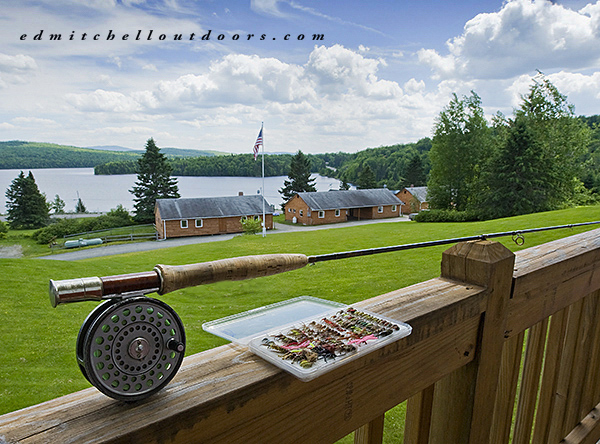
My Fly Box

My Fly Box

The Long Island Bonefishing Lodge suggests several fly patterns (Gotchas, Charlies, Puffs…etc.) in sizes 4,6,8 – of varying colors and weights. Fair enough, but let me refine that for you.

On the flats of Deadman’s Cay, our fishing was done in 5-15 inches of water. Skinny, skinny water. Consequently, any fly that landed with a “plop” immediately spooked fish.  Instantly! So small, lightly weighted (or unweighted) flies ruled.  Sizes 6 and 8 flies with bead-chain, or key-chain, eyes are as heavy as you want to go. Lead-eye flies were verboten. They may work wonders on the ocean-side flats, or farther north, but not here. (Weighted or unweighted, be sure you’re flies ride hook up. I’ll tell you why at the end of this post.)

Because the bottoms are mainly light-colored, light-colored flies did yoke-man’s duty – white, pearl, pink, tan…etc. But don’t be afraid to add a splash of color. It helps catch the “bone’s” attention. As you can see in my fly box above, I like some yellow, purple, pink, orange, or red in my flies.  And I also like colorful rubber legs. They’re helpful too. (Check occasionally that they haven’t fouled around the hook.)

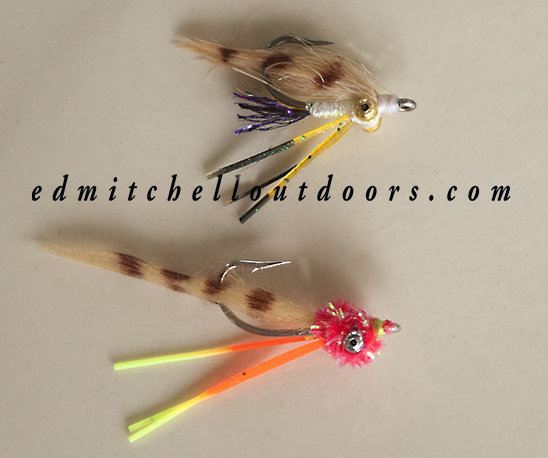
Size 8 Gotcha-type & a Size 6 Puff

Size 8 Gotcha-type & a Size 6 Puff

Here’s two flies that worked for me. A size 6, Puff and a size 8 Gotcha-type fly. By the way, you can find well-tied bonefish patterns, at excellent prices, over at Discount Flies.com

Let me mention one final point ( no pun intended). Be sure your flies ride hook up. Why? Two reasons. Obviously a hook that rides up is a help when fishing over a turtle grass bottom. Second, and more importantly, a bonefish’s mouth is oddly shaped. It points downward, and the upper jaw is noticeably longer than the bottom jaw. A hook riding point up is far more likely to find a secure hold.

Part 5, will  cover rods, leaders & lines

Posted in Bonefishing, Fly Fishing in Salt Water | Leave a comment