Do Flats get Damaged?

Do flats get damaged? You bet. Sometimes its Mother Nature at work. Wind, super moon tides, tropical depressions, hurricanes, all take a toll. And they can change a flat overnight, believe me. I’ve seen it happen. But other times the damage is man-made. That’s right we’re to blame.

Prop scars are the most common type of man-made damage. We have all seen them. Hell, on some flats they crisscross all over the place. Captains misjudges the water depth and next thing you know the prop starts digging a path across the bottom, often ripping up long strips of turtle grass. Not good. Not good at all. Turtle grass is a life link on the flats. Its critically important. And those grass scars can take twenty years to heal. Two decades!

Yesterday I came across the biggest man-made damage I’ve seen in a long time. I’m paddling along the sandbar, when I saw a dark patch up ahead where none existed before. Ummmm. As I got closer I climbed out and took a better look. It was a deep hole in the sandbar. Damn. Meteorite maybe?
Do flats get Damaged?

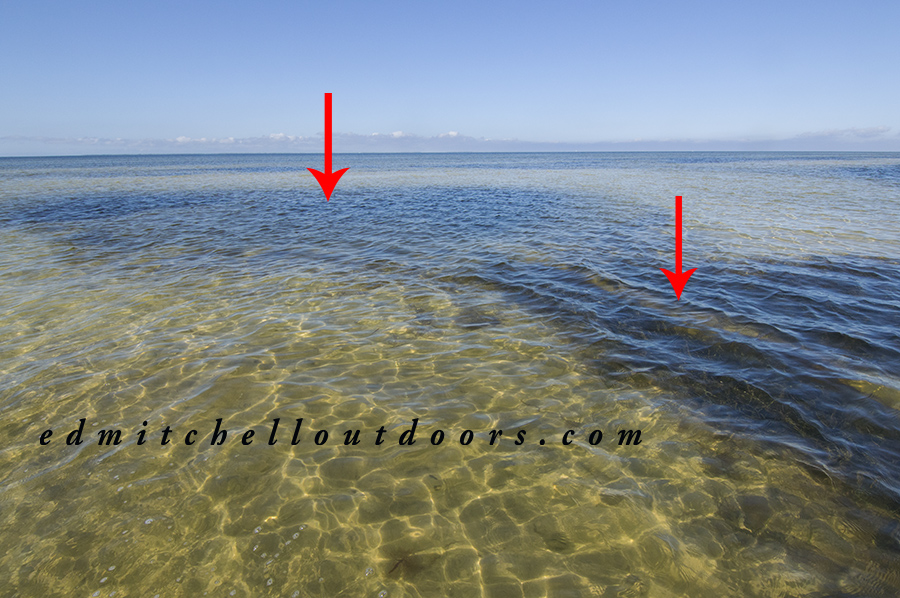
Naaa. Apparently some captain tried to exit the flat by crossing the sandbar. (In the picture he was traveling from right to left.) Well the tide wasn’t deep enough. The red arrow on the right points to his approaching prop scar through the turtle grass. Out of the picture on the extreme right, there is a hole were his prop first banged bottom. It tells me the motor popped up on impact. But that didn’t save our intrepid captain. Oh no, he was traveling fast. So the boat’s forward speed propelled it up on top of the sandbar, where it ran aground. My, my. Problems in paradise.

The left hand red arrow tell us what happened next. Stuck on the sandbar, our skillful captain decide the best course of action was to jam the throttle wide open, hoping his motor would vault his crazy-ass over the bar. Sorry, captain no way. Instead the motor just burned a hole in the sandbar. It must have been a lovely sight. Just imagine his outboard sent up a rooster tail of mud and sand half way to the sky. Probably visible for a mile or more.

So how big is this hole in the bar? Its approximately 14 feet in diameter. Man oh man. This knucklehead spent some time, and gas on this misadventure. Good going captain. You’re an ace. And get this, the hole is five stinking feet deep! That’s right five feet deep. Incredible. The only good news is this: there is no exit mark. He never made it over the bar, and likely had to get help. Believe me he needs help.


Posted in Environment, Fly Fishing in Salt Water, Uncategorized | 2 Comments

The Last Redfish in 2016?

The last redfish in 2016? Well, maybe… maybe not. Still I’m comfortable in saying these are the last two redfish caught on fly in 2016…… at least in Charlotte Harbor!
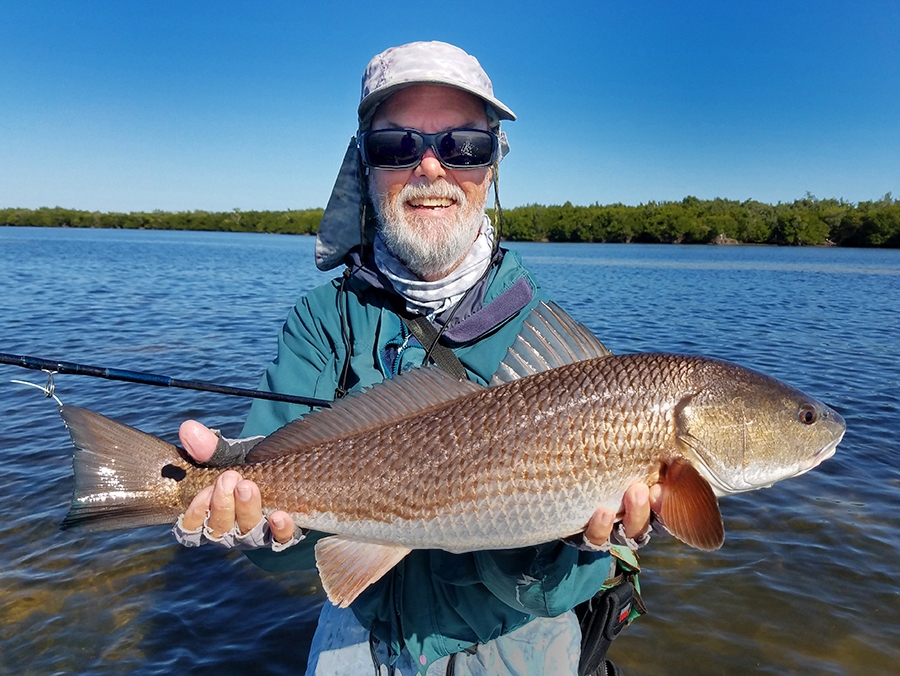
Andy and Dave fish together a fair bit, so its no surprise they were on the water on December 31. And its no surprise they both got a red. Both of them have fished these waters for years.Experience counts, believes me.

Andy’s red was a “tailer”. You gotta love that. “Tailers” are always challenging in Charlotte Harbor. (I told you why back in a January post last year.) Lotsa things need to go right. Lotsa things. The fly Andy used is shown below. To my eye it looks like a variation on the Seaducer, a time tested pattern. For the record, many folks credit Mark Sosin with the Seaducer. Actually Homer Rhode Jr. created the original pattern.

Andy’s Last Redfish of 2016

Andy’s Fly

Not to be outdone, Dave nailed a larger red. I believe he caught his off the deep side of sandbar. On low water, some reds exit the flat and cruise the outside edge of the sandbar, awaiting the tide’s return. The trick here is to see the “cruiser” coming along the bar.  Not always easy. Next you have to drop a crab fly ahead of the red, allowing the fly to settle to the bottom. As the red nears, you twitch the fly and slowly retrieve it away. If all goes well the red darts over and sucks in your offering. Sweet when that happens!

Dave’s Last Red of 2016


Posted in Fly Fishing in Salt Water | Leave a comment

Do redfish “tail” in the fog?

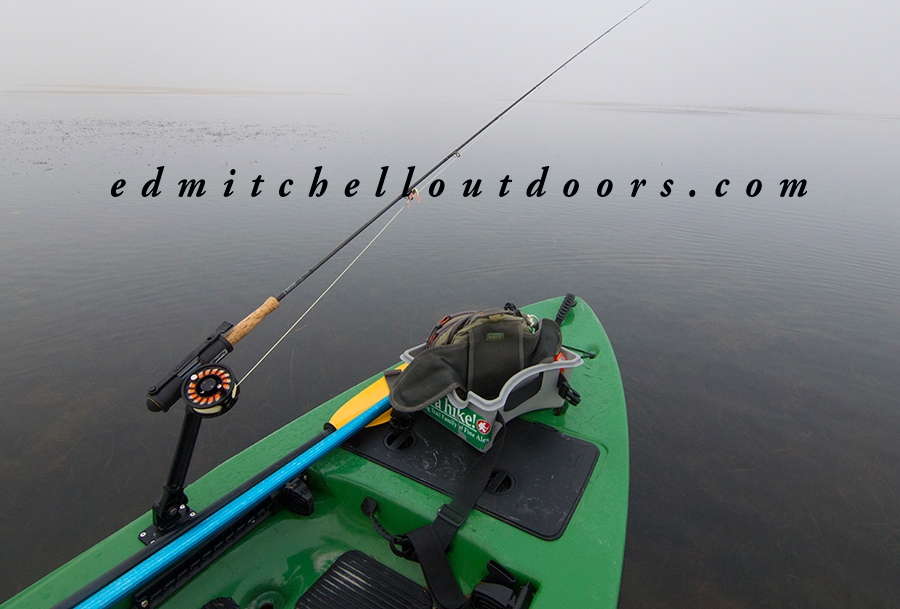
Do redfish “tail” in the fog? Absolutely. In fact foggy mornings with low water are some of  my best opportunities to find “tailing” reds. Why? Fog typically mean no wind. That’s a good thing. Fog also means no boat traffic. Another good thing. And last, but not least, fog delays the sun reaching the water. And that extends the fishing.You gotta love that too.

Do redfish “tail” in the fog?

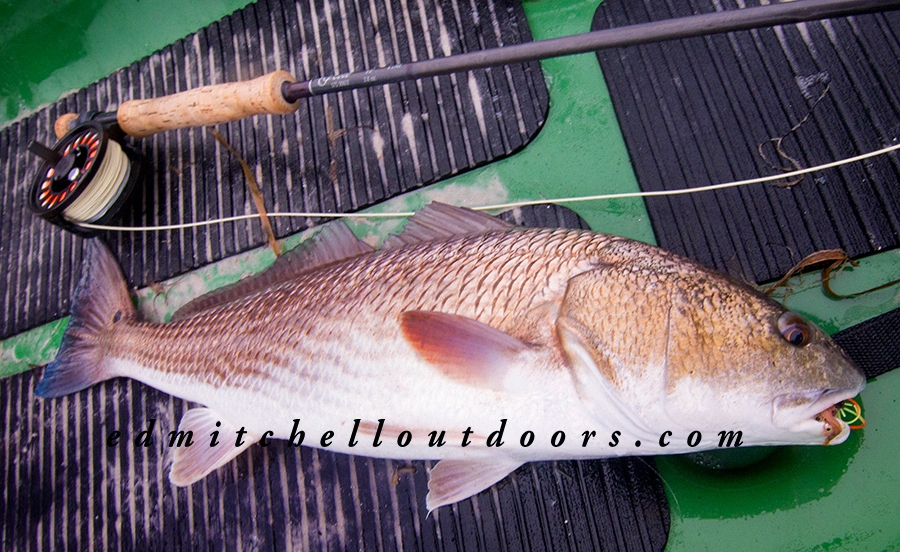
Well, well, this morning we had a wicked low tide and thick fog. Paddled out in the pea soup around 7 AM to one of my favorite spots, hoping to find some “tailing” reds. Bingo they were there. Don’t you love it when a plan works? Unfortunately the first two “tailers” totally ignored my fly, preferring to keep their heads buried in the turtle grass. Okay I get it. Why chase a fly when you have a real blue crab in your sights? Makes more sense to stick with the food in front of you. The tasty stuff Mother Nature provided.  Damn. Hate when that happens. And believe me, it happens a fair bit. But the third “tailer” was a hungry young lad and gobbled my crab fly with gusto.

Do redfish”tail” in the fog?

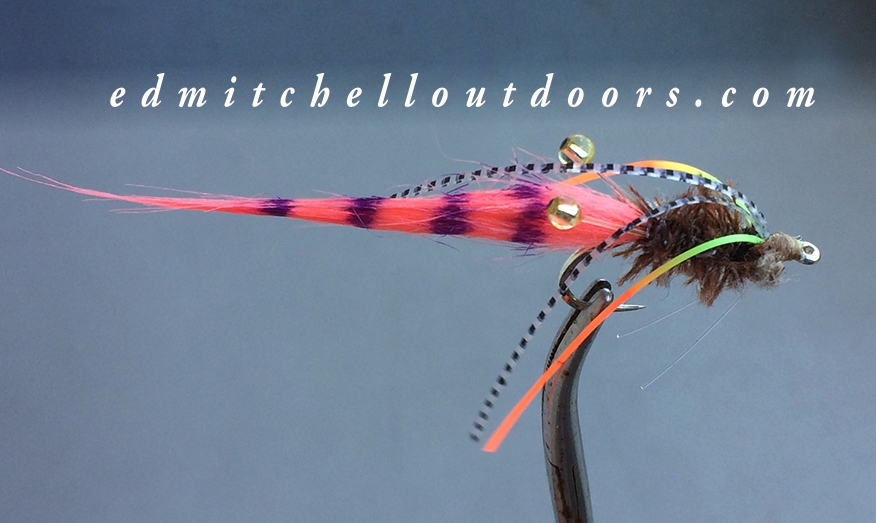
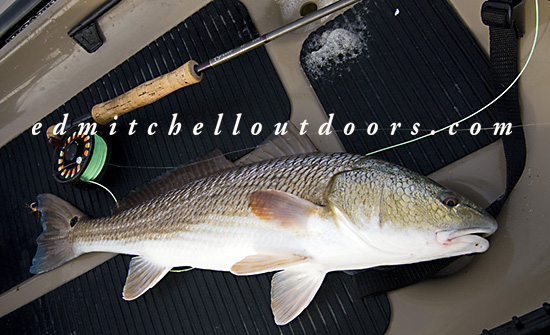
It wasn’t a huge red, about 25 inches. Which is average for these waters. Still it put up a great scrap on a 6-weight fly rod. Why am I using a 6-weight? In shin deep water you don’t need a rod with lifting power.  You need a rod that delivers a fly with stealth. A 6-weight does that in spades. The rest of the rig was a floating line, a 12 foot leader tapered to 12 pound test, a size  4# crab fly. The same fly we looked at few posts back.

Neon Crab Fly


Posted in Fly Fishing in Salt Water | Leave a comment

No “Tails” Today

11/27/2016  Hit the water before dawn this morning. We had a good low tide enhanced by a night of north winds. Had my fingers crossed I find a few “tailing ” reds, head down chewing on crabs in the turtle grass. But luck wasn’t with me. No “tails” today.

no-tails-today_2016

No “Tails” Today

Finding “tailing” reds isn’t easy in my home waters of Charlotte Harbor. Damn,  every thing has to be just right.  You need low light, low water, low winds,  and no boat traffic.

That’s a tall order, believe me. Akin to hitting the trifecta. And even when all is well with the universe, there is no guarantee the reds will “tail”. And even when they do “tail” they may be spooky as hell, ignore your fly and flat out refuse to bite. Crazy.

All you can do is put your time in and hope for the best. Persevere. Grit your teeth and push onward.

Why bother? Frankly this “tailing” red business is far and away the most challenging and interesting fly game down here. If you get “tails” to shoot at, you’ll also need eagle eyes, be able to sneak up like a commando, cast accurately, have a good fly, and use the right retrieve. Yeah there is a lot to it.  But when the planets aligne amigo, wow! The “tail” slips out of sight, the red glides over, grabs the fly, feels the steel, and then rips off across the flats like a rocket, rod bent, reel screaming. Suddenly you’re king for the day!

Posted in Fly Fishing in Salt Water | Leave a comment

More about the Neon Crab fly

Awhile back I began exploring the potential of brightly colored crab flies. Well its time to talk more more about them -more about the Neon Crab fly.

More about the Neon Crab Fly

More about the Neon Crab Fly

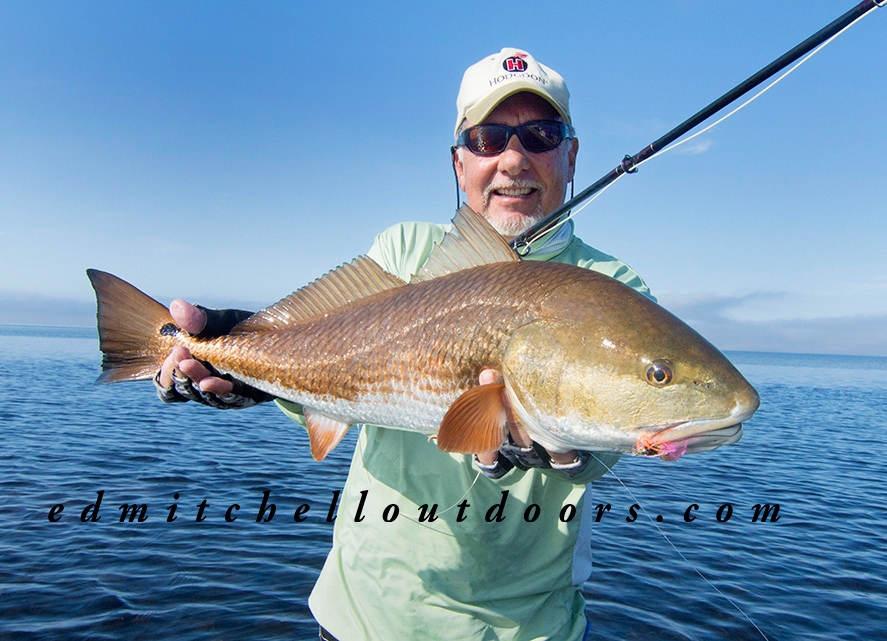
Back in January of this year, I caught the above red.  If you look closely you’ll see a crab fly stuck in its craw. Pink tail, yellow and hot orange rubber legs. Yeah its a Neon Crab fly.

Now this post is not an attempt to get you to chuck your “match the hatch” crab flies. The ones in tan, olive and green. They work after all. But I am saying you should carry brightly colored crab flies as well, especially where the water isn’t perfectly clear. The very first thing an effective fly has to do is to be seen, right! And if fish can’t find it you’re dead in the water, right? Okay, enough said. Recognize too, that bright colors can trigger an aggressive strike from fish that are otherwise reluctant to bite. And in recent times many fly tyers, sea-trout anglers in Sweden come to mind, swear by effectiveness of fluorescent colors and UV materials.

More about the Neon Crab Fly

More about the Neon Crab Fly

Lets take a quick look at tying one of these Neon Crab flies. I tie them in both size 2# and 4# on Mustad Big Game C70SD hooks. Thread color isn’t terrible important, but I tend toward tan. Since I typically fish them in very shallow water, I generally use only bead-chain eyes. But if you fish deeper, lead-eyes are appropriate.

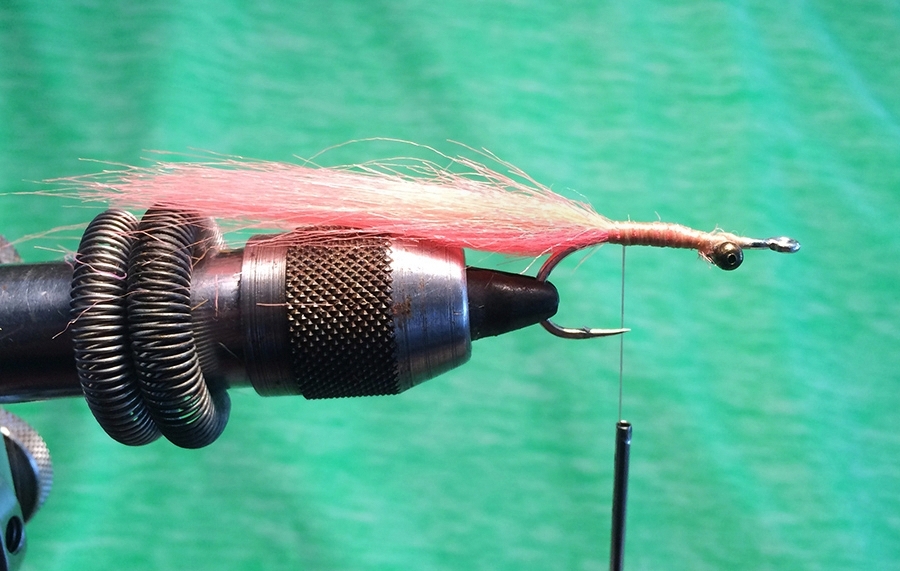
Step one

Step one

The tail in this particular example is pink craft fur. Its a bit long and I will trim later. Twice the hook shank is all you really need. Note that the bead-chain eyes are tied in below the hook. More on this in a moment.

Step 2

Step Two

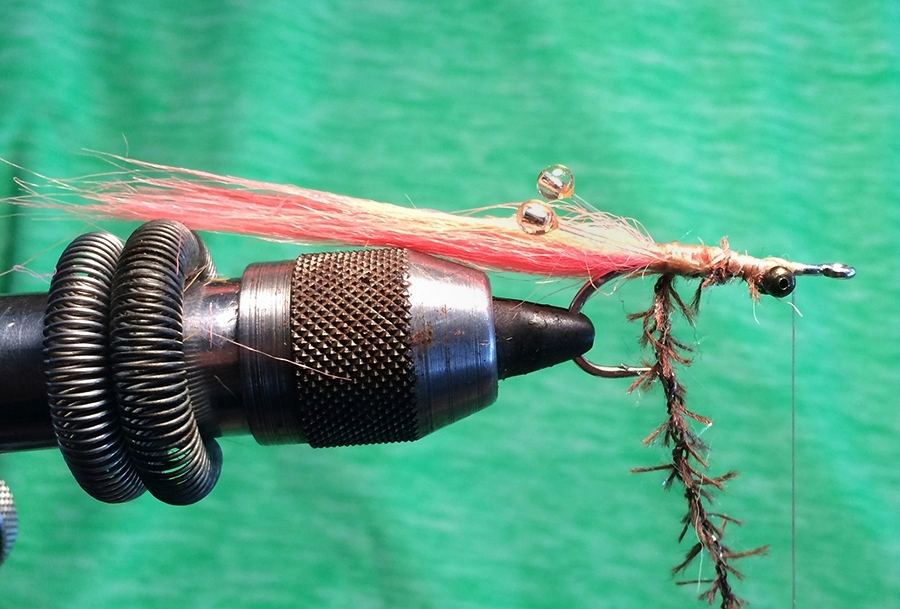
At this point I’ve tied in glass eyes, and super glued them in place. I’ve also tied in some brown Woolly Chenille to the underside of the hook. You could substitute a dubbing loop and “dub” the body, if you prefer.

Step Three

Step Three

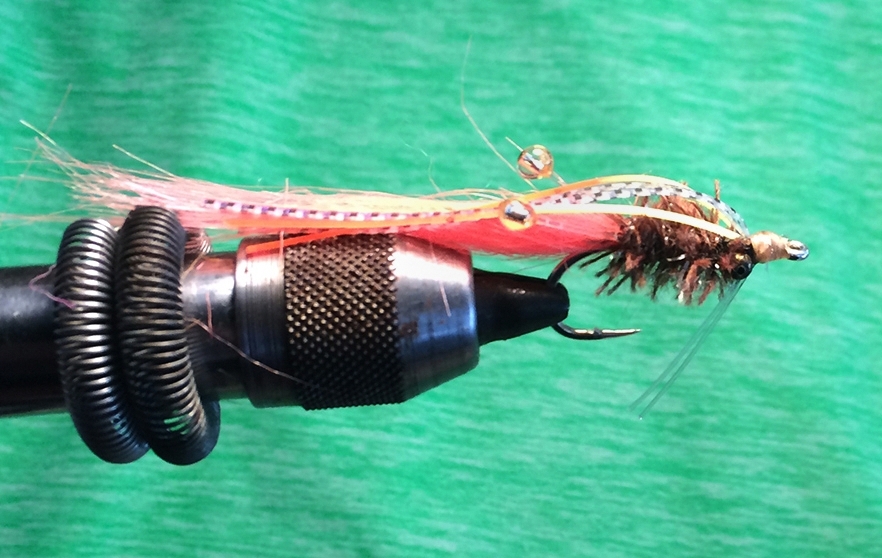
After winding  the chenille forward and lashing it down, I tied in two sets of rubber legs just forward of the bead-chain eyes. Placed here, during the retrieve they tend to splay outward and give you plenty of action. Plus, when the legs break off after a fish or two, you can sit down at the vise and easily replace them. Next, I added a 20 pound mono weed guard.

So why did I tie the bead-chain and chenille on the bottom of the hook? Simply this: For the weed guard to work properly, the hook must ride point down. The final step is to add a few bars to the tail with a laundry marker. Now you’re done!

Posted in Flies and Fly Tying, Fly Fishing in Salt Water | Leave a comment