The Winston Big Game Fiberglass Fly Rod

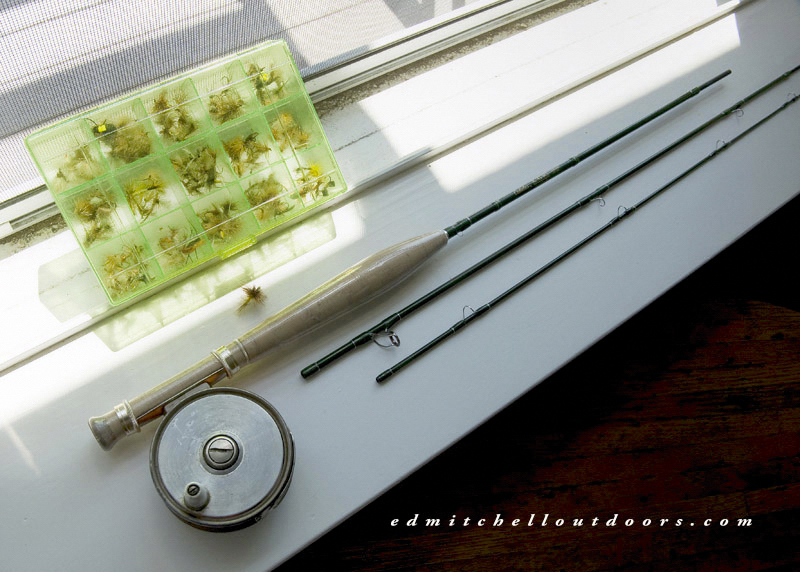
A large number of people have stopped by to look at the glass rods. So, let’s do one more. After that I’ll show you a beautiful old, six strip, split bamboo fly rod. It was one of a handful designed 60-years ago specifically for salt water.  

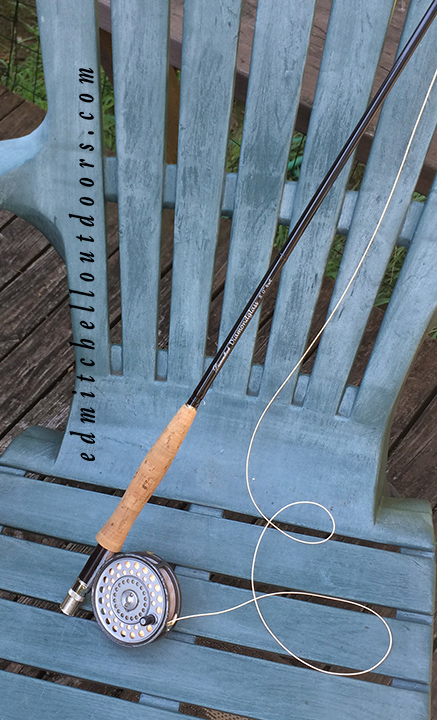
Several posts ago, we discussed the smallest Winston glass rod available in the 70’s and 80’s. This time around, we’ll look at the largest, the Winston Big Game fiberglass fly rod – a 9-foot, 2-piece rod  for 12 or 13-weight. 
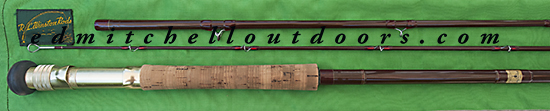
Winston Big Game Fiberglass Fly Rod

Winston Big Game Fiberglass Fly Rod

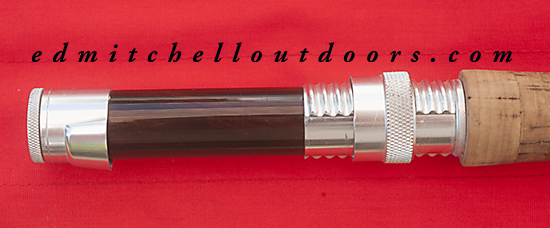
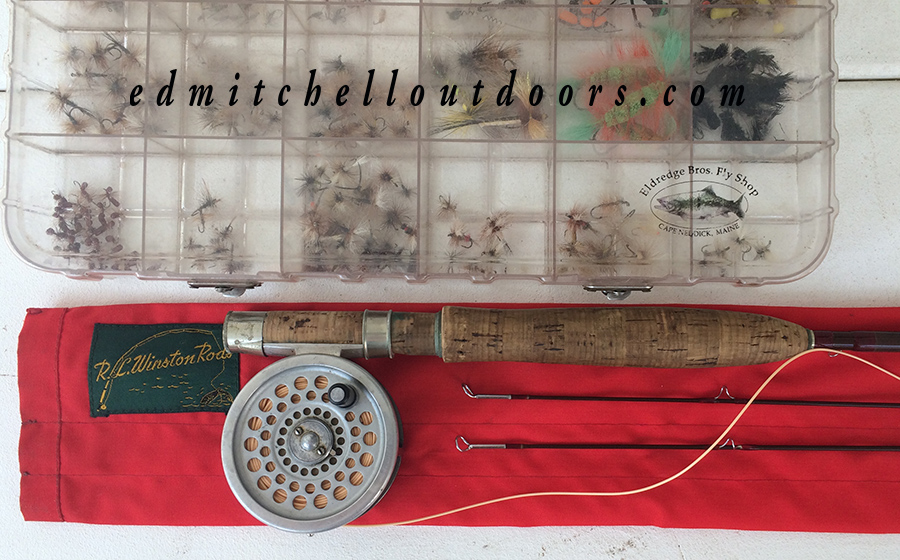
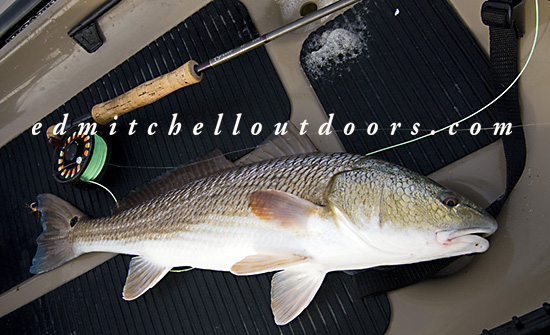
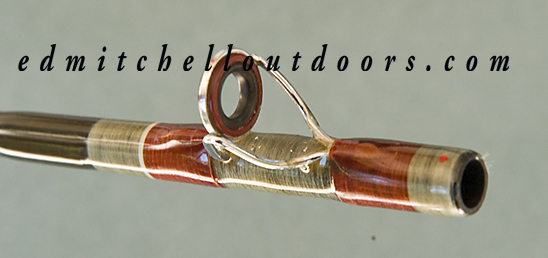
The catalogue described it as a heavy-duty rod for truly large saltwater fish. To that task, the rod has a reinforced butt section with the necessary power to subdue fish in excess of 50 pounds. The Big Game rod wears multiple stripping guides. They are not carboloy, but of a modern insert design. It has a double uplocking, Cal Air aluminum reel seat. Since this seat positions the reel forward away from the body, no butt extension was offered. The rod tips the scales at a hefty 7.5 ounce. At this extreme end of the fly rod spectrum, fiberglass is clearly showing its limitations. Today a graphite 12-weight rod weighs two ounces less.
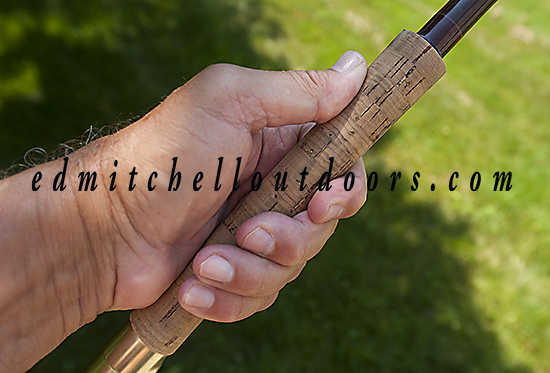
Ritz Grip

Ritz Grip

You could order the Big Game with either a half-wells or a Ritz grip. Mine has the Ritz. Credited to Charles Ritz – writer, inventor, and hotel kingpin – this grip has a simple continuous taper. It is smallest in diameter down at the reel seat, and then gradually expands as it climbs to meet the winding check. It is a comfortable grip and transfers power from the hand to the rod very well. I like it. And, unlike a wells type grip which has dips, the uniform taper allows you to easily reposition your hand.

I purchased this rod not out of need, but out of a desire to complete my collection. It was clear at the time that graphite was taking over and that Winston fiberglass rods were going the way of the Great Auk. I used the rod on occasion, however. From a boat, I launched very heavy sinking lines to striped bass. And, off Newport, Rhode Island I used it to cast to Blue fin tuna.

I hope you enjoyed a look at another example of fiberglass fly rod history.

Winston Retro Rod

Winston Glass 5wt, Winston Glass 6wt, Winston Glass 8wt,Winston Glass 10-weight,
Posted in Fiberglass Fly Rods, Fly Fishing in Salt Water, Fly Rods, Gear | Leave a comment

Casting a Kabuto 7-foot, 3-weight Fly Rod

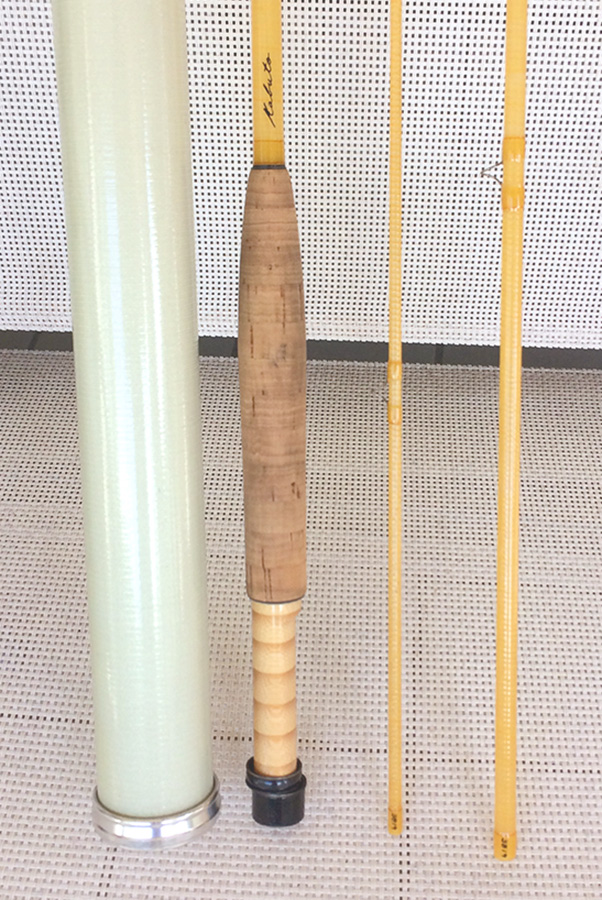
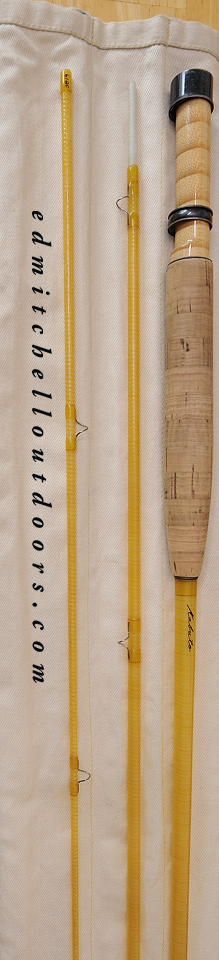
It’s time to talk about casting that Kabuto 7-foot, 3-weight fly rod we looked at a few posts back. www.kabutorods.com   This rod has a progressive taper. The action is moderate (mid-flex), but faster than the older Winston glass rods mentioned on this site. That comparison is a bit tenuous, however, because the Winstons have many years of use.
Given how much we anglers vary (height, weight, age, strength, and athletic ability) casting is always a subjective experience. With a 3-weight line, this rod loads in the upper 1/3. And for me, the Kabuto casts comfortably. It is accurate and very much at ease out to 45 feet. I tried a 2-weight line as well. The rod cast it, but felt underlined. Unfortunately, I did not have a 4-weight fly line handy, so I tried a 5-weight next. The rod loaded much deeper – down at least to the stripping guide. Yet the rod cast surprisingly well, courtesy of the power in the butt section. Hence, a 4-weight line is definitely an option. (If this rod interests you, be sure to read recent update on 4wt line!) This range makes the Kabuto a versatile rod, capable of adapting to the owner’s casting style and needs.

Finally, here are two general thoughts about small glass rods. Short rods have one distinct disadvantage; they make it harder to mend line. This quickly becomes apparent when casting a dry fly over a complex current. The remedy lies in improving your curve-cast, your wiggle-cast, and your reach-cast. Next, when an increase in distance is required, a fast tip-action graphite rod usually responds well to an increase in casting force. A slower fiberglass rod often doesn’t. And, the slower the rod, the truer this becomes. So what do you do when that big trout pops up a bit farther out? You lengthen your casting stroke-the distance your casting hand travels from front to back.

If you’re interested in learning more about these fly rods, visit this excellent site www.thefiberglassmanifesto.blogspot.com Have a great day with your glass rod.

Posted in Fiberglass Fly Rods, Fly Fishing in Freshwater, Fly Rods, Gear | Leave a comment

A Winston Fiberglass 9-foot, 8-weight Fly Rod

Ok, lets do another fiberglass rod. Hey, we’re on a roll. This time we’ll look at a larger one. It’s a Winston fiberglass 9-foot, 3-piece, 2-tip, 8-weight fly rod. This rod came from a series Winston built –  once upon a time – for salmon, steelhead, bass, or light saltwater. I used it in the brine for striped bass. It was ordered as a “‘set” with the 6-weight in the previous post. They arrived together in an 2.5″ diameter rod tube.

20140624_Winston 8-weight_smaller0068

Winston Glass 9-foot, 3-piece, 2-tip, 8-weight

Overall, this is a handsome rod. It has a half-wells grip. The reel seat (Cal-Air?) is very attractive, down-locking, and excepts a removable butt extension. It has a rosewood insert. The rod’s weight is listed as 4 5/8 ounces. Rod color and wraps are the same as the 6-weight I posted prior. Spigot ferrules, once again, and 2 carboloy stripping guides.

Winston Glass 8-weight Reel Seat

Winston Glass 8-weight Reel Seat

The catalogue called the action “moderate”. Fair enough. Yet I don’t believe this rod is simply progressive. To me, it feels slightly parabolic, suggesting a compound taper. Initially I lined it with a 9-weight shooting head and mono running line. Then I swapped it for a full length WF8. The WF8 handled big flies better, and caused fewer tangles -a major boon. Either way the rod effortlessly threw a long line. And it is a wicked hoot with a bass aboard. Man, you gotta love it. Still this rod saw little use for one reason only. I soon learned that a Winston glass 10-weight was a more appropriate general-purpose striper tool.

I’ve had a blast covering these “oldies but goodie” glass rods. Hope you liked reading about them. Let me know if you did. I have more Winston fiberglass rods I could cover. Winston Stalker     Winston Retro Rod   Winston Glass 5wt, Winston Glass 6wt, Winston Glass 10-weight,  Winston Glass Big Game 12wt

If you’re interested in learning more about glass fly rods, visit this excellent site www.thefiberglassmanifesto.blogspot.com

Posted in Fiberglass Fly Rods, Fly Fishing in Freshwater, Fly Fishing in Salt Water, Fly Rods, Gear | Leave a comment

A Winston Fiberglass 8-foot, 6-Weight Fly Rod

Winston 3-piece 6wt

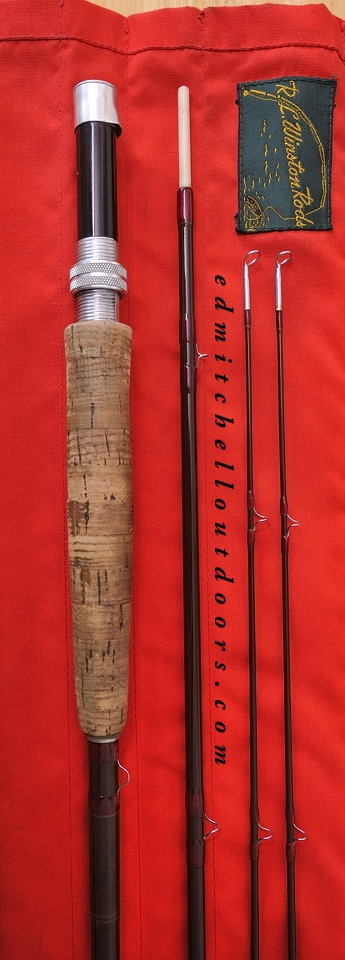
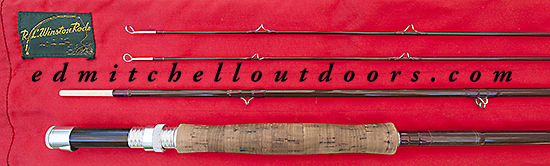
Today there are a growing number of fiberglass fly rod fans. And with good reason. Glass rods can be great. So I thought it would be fun to cover another one.  Truth is I own seven Winston glass fly rods, ranging from the smallest one they made to the largest.  In this post we’ll look at a middle of the road model – a Winston fiberglass 8-foot, 3-piece, 2-tip, 6-weight fly rod.

This is the first Winston I bought, and still my favorite. As with the rest, I acquired it directly from the factory. Even now, it is still my favorite all-around trout rod. From the Beaverkill to the Bow River, I have caught more trout on this rod then any other. It weighs 3 1/8 ounces. The action is progressive, and in today’s world would be listed as slow-to-moderate. Although intended for a 6-weight line, early on I found it was best in my hands with a DT5. As the seasons slipped by, I switched to a WF5 and never looked back.

Like all Winston glass, this rod is brown with red wraps (Gudebrod), tipped in turns of clear. Built with phenolic resin, it wears a down-locking reel seat, cigar grip, carboloy stripping guide, and spigot ferrules. In the casting department, this is a terrific performer, able to work in tight, yet ready to reach out. Even after 30 years of hard use, it will easily cast 40 feet and farther.

This rod along with the Stalker – mentioned in the post below – became my streamside dynamic duo. Ready to deliver anything from a size 8 streamer to a size 20 BWO. On occasion, I carried both  down the trail. The 6-weight rode in my hand. The Stalker, in its tube, rode on my back. Most of the day, the 6-weight was the right wand. Then as the light faded, and the fish rose, I switched to the Stalker.  The duo made for a great day on the water. Winston  Stalker, Winston Retro Rod,

Winston Glass 5wt, Winston Glass 8wt,Winston Glass 10-weight,

Winston Glass Big Game 12wt 

If you’re interested in learning more about glass fly rods, visit this excellent site www.thefiberglassmanifesto.blogspot.com

Posted in Fiberglass Fly Rods, Fly Fishing in Freshwater, Fly Rods, Gear | Leave a comment

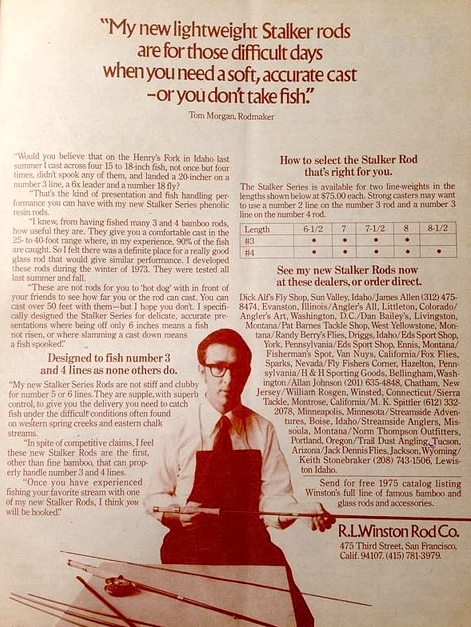
Winston Stalker Fiberglass Fly Rod

Available in ’70s and ’80s, the Winston Stalker fiberglass fly rods were designed to fish with the delicacy of Winston’s famous “Lettle Feller” bamboo rods; which had been around since the ’30s, and first developed for small dry flies on Catskill streams. And these fine “glass” rods did just that, and are justly world famous.

A Winston Stalker Fly Rod

A Winston Stalker 6’6″, 2-piece, 2-tip, 2wt Fly Rod

Winston Stalker

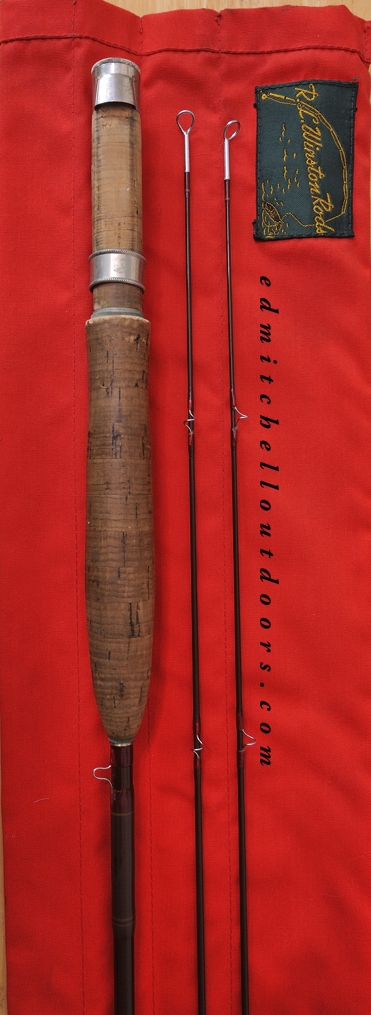
There were nine models in the Stalker series, ranging from an 8-foot, 6-inch, 4-weigh, down to the one shown in photo – a 6-foot, 6-inch rod, for a 2 or 3-weight line. They came in red poplin rod sacks, with a handsome green & gold woven emblem. Nice, real nice. I acquired the above rod over the phone from Winston eons ago, with two tips and an upgraded tube with brass cap.  Believe me when I tell you this rod has brought me a great deal of joy over the years.

This Stalker is Montana built. The  e-glass blank is tobacco brown with red wraps, tipped with a few turns of clear. It has a spigot ferrule and a German silver slide-band reel seat. The grip is 6″ and fine. Seven snake guides, and a single carboloy stripper ride the blank. Listed weight is 1.6 ounces. My friend, the rod is a feather in your hand. It casts a fly with just a hint of fly line outside the rod tip. With five feet of fly line out, the rod comes alive, and delivers smoothly and accurately out to twenty-five feet and a bit beyond. It’s a joy to cast. All of this with a 2-weight fly line.

As you might imagine, this Stalker is best with dry flies size 14 on down. BWOs, Tricos, Sulphurs, small caddis, and midges, fit the bill nicely, as do terrestrials flies to match ants, and beetles. While this may sound like a limited range of application, in the right circumstance this Stalker becomes a rare gem. At dusk, when the wind drops, the water turns to glass and the hatch begins, my 6-weight gets put away. (A Winston “glass” rod as well.)  Now in the failing light the Stalker appears to drop dries with the softness of misty rain.

And fear no fine tippet, amigo. Bring on the 7x, hell bring on the 8X. The rod is very forgiving. Rear right back on it. Capable of turning a bluegill into a bluefin, and a fifteen inch trout into a river monster, this tiny rod can also morph a so-so day into a memorable one. Peewees rods are very cool. If you’re interested in learning more about glass fly rods, visit this excellent site www.thefiberglassmanifesto.blogspot.com

(Earlier on Winston produced a less known group of  rods called the R.L. Winston Ultra-Light Fiber Glass Trout Rods. I believe these 5-weight rods were built with similar intent and predate the Stalker Series. You can see more info here.)

PS    Interested in looking at other Winston “Glass” rods? Check out the links below.

Winston Retro Rod, Winston Glass 5wt, Winston Glass 6wt, Winston Glass 8wt,Winston Glass 10-weight, Winston Glass Big Game 12wt

Posted in Fiberglass Fly Rods, Fly Fishing in Freshwater, Fly Rods, Gear | 6 Comments