Thoughts on Wading Staffs

Thoughts on Wading Staffs
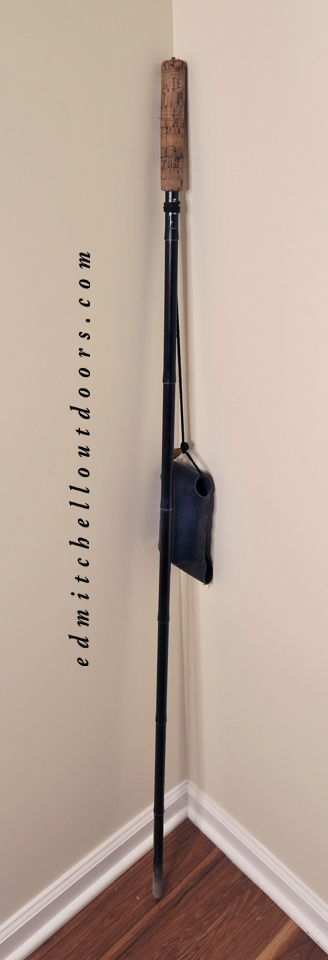
Wading Staff

Falling in a fast moving river is dangerous business, my friend, especially in the colder parts of the year. And for that reason, the older I get the more I rely on my trusty wading staff. It offers a serious measure of safety, one that you should never ignore.

My wading staff is a 30 year old 59″ FolStaff with a carbide tip. It is constructed from 3/4″ aircraft grade aluminum, making it very strong and rust free. At one time FolStaff was pretty much the only manufacturer of quality wading staffs. Today, however, you’ll find staffs from many companies including Orvis, Simms, and REC.

My staff came with a leather holster and a 1/4 -20 thread on top for a camera. The staff folds down to about 10″.  And it has an internal bungee chord for quick deployment. But lets stop right there. Always store this type of staff fully extended to take pressure off the bungee and thereby prolong its life. Always.

Other types of staffs. Wood staffs have been popular for many years and I have owned several. Ash, maple, oak. They are cheap, attractive and can be DIY. But wood has a couple of down sides. Too often they are not long enough for proper support. In time they often absorb water and split. Typically they do not have a metal tip for good purchase on the bottom. (By the way rubber tips on a wading staff are near useless on a rocky bottom, much like rubber sole waders.) And wood doesn’t retract, making it a nuisance to travel with. Another commonly seen alternative is a used ski pole. Why not? They are cheap and have a metal tip. As a result people see them as a real deal. In my opinion, however, you should never use them.  They weren’t designed to bear your full body weight. So if you are suddenly forced to lean into one heavily, it is apt to bend and snap, dropping you in the drink. Beware.

Uses: Wading staffs are useful both in and out of the water.  Staffs are great for descending a steep hillside to the stream. Or navigating a slippery trail. They can also help you retrieve a fly off a tree limb. Help you clear a path though briars. Help you retrieve your forceps when dropped in the stream. Help you ward off a nuisance animal. Even break a car window in an emergency situation. And mine doubles as a camera monopod, allowing me to steady shots with telephotos or long exposures. Get you some of that.
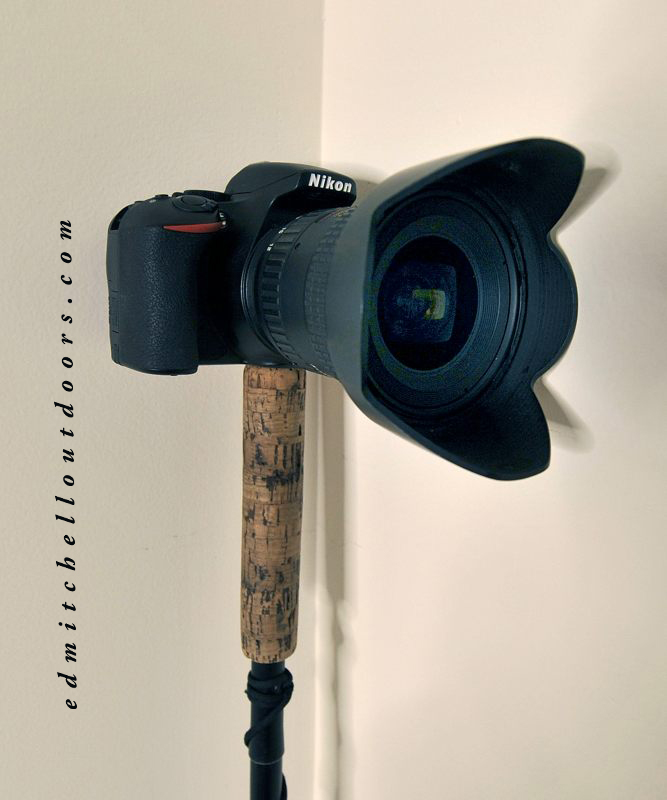
Wading Staff as a Camera Monopod

Lastly, be sure to secure your wading staff to a sturdy wader belt. I like the Fish Pond Rio Grande belt. At some point I may offer tips on how to best use a wading staff in the stream. But enough for now.
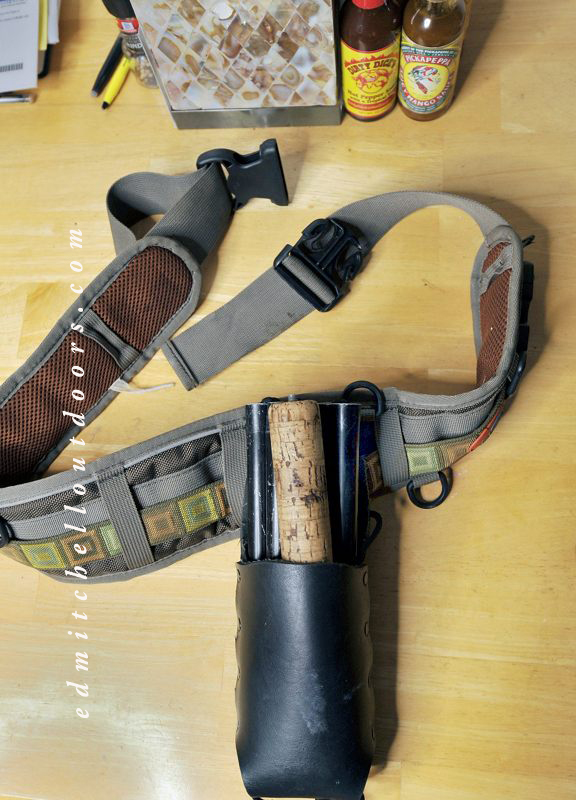
Wading Staff on a Wader Belt
Posted in Gear | Leave a comment

The AF-S Nikkor 14-24mm F2.8 ED Wide Angle

The AF-S Nikkor 14-24mm F2.8 ED Wide Angle

You may be wondering why I’m not posting more about fishing adventures. Well its the crazy weather. It has been whacko to say the least. Heat waves followed by sudden drops in temperature. Recently it rained 13 out of 14 days, with more rain coming. Believe me the rivers and streams are swollen, out of their banks and near flood stage. A sorry state of affairs, and summer is half gone! Damn.

AF-S Nikkor 14-24mm F2.8 ED

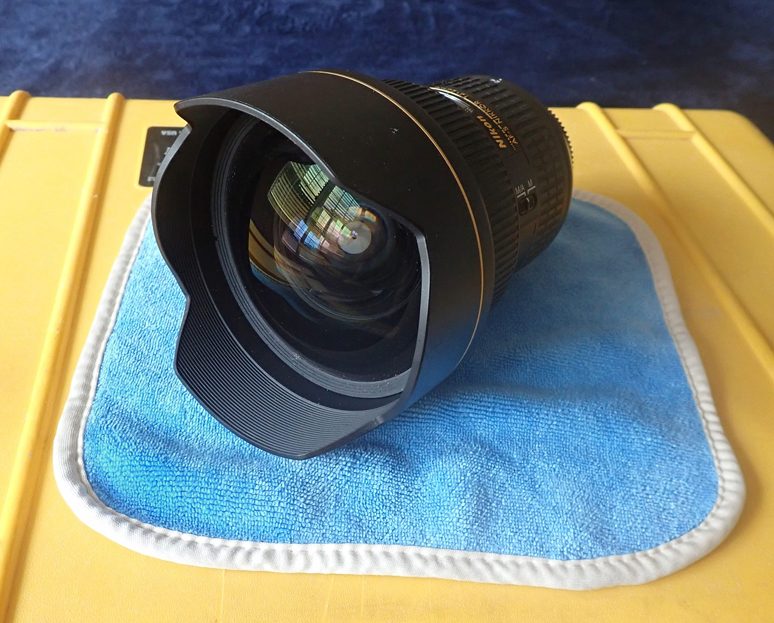
So hey, lets discuss photography instead. And in particular lets turn our attention to wide angles, the most important lens an angler can own.  Back in my film days, I replied heavily on a Nikkor 20mm F2.8. Not bad glass, but nowhere near the finest wide lens I have ever owned. That crown goes to the mighty AF-S Nikkor 14-24mm F2.8 ED. A legendary optic.

AF-S Nikkor 14-24mm F2.8 Ed

This Nikkor is the widest zoom Nikon makes. The focal length range is near perfect for both close in work and landscapes. In top of that, it is FX, full frame 35mm. (Mates perfectly with my old Nikon D700) Yes you can use it on DX format too, but screw that. DX  has never equaled FX. The AF-S Nikkor 14-24mm F2.8 ED holds a constant F2.8 maximum aperture through its entire focal range. A useful feature. The glass has a superb Nano-crystal coating to reduce flare. Voila! The images are juicy – stunning, sharp, and saturated, with far less spherical aberration and distortion than you would expect.  Get you some of that!

Is the AF-S Nikkor 14-24 mm F2.8 all strawberries and cream? No. The curved front element will not accept a screw-in filter.  And this baby is a behemoth. It weights a hair over 2 pounds. You heard right, a full kilogram. (my Nikkor 20mm F2.8 weighted 9.8 ounces) And its not cheap; around $1800 new. Get scared off? Cowboy up dude. What you’re getting is a killer image maker. Killer, killer, killer.

Posted in Photography | 2 Comments

Euro-Nymphing with a Crappie Pole?

Euro-Nymphing with a Crappie Pole?

Euro-Nymphing with a Crappie Pole

By buddy Phil is always figuring out new ideas. You may remember a few posts back he showed us how to use an ice float for fly storage.

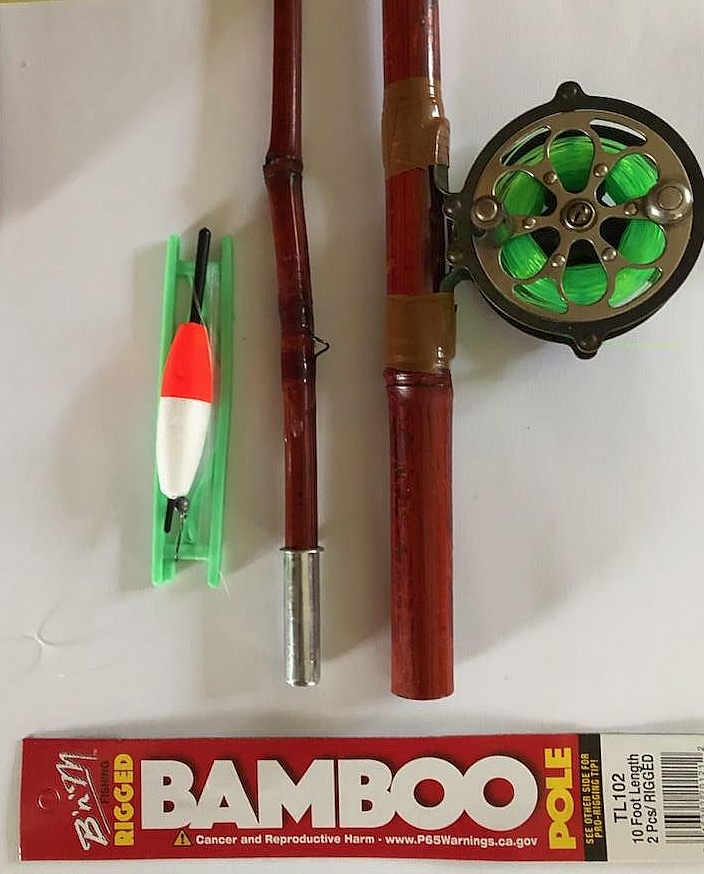
Well recently he has been fascinated with learning how to euro-nymph. Hey why not? It is a deadly way to fish. We all know that. But Phil wasn’t about to drop 900 buckeroos on a new super duper euro-nymph rod.  So he did a little hunting around instead and came up with this clever work-around.

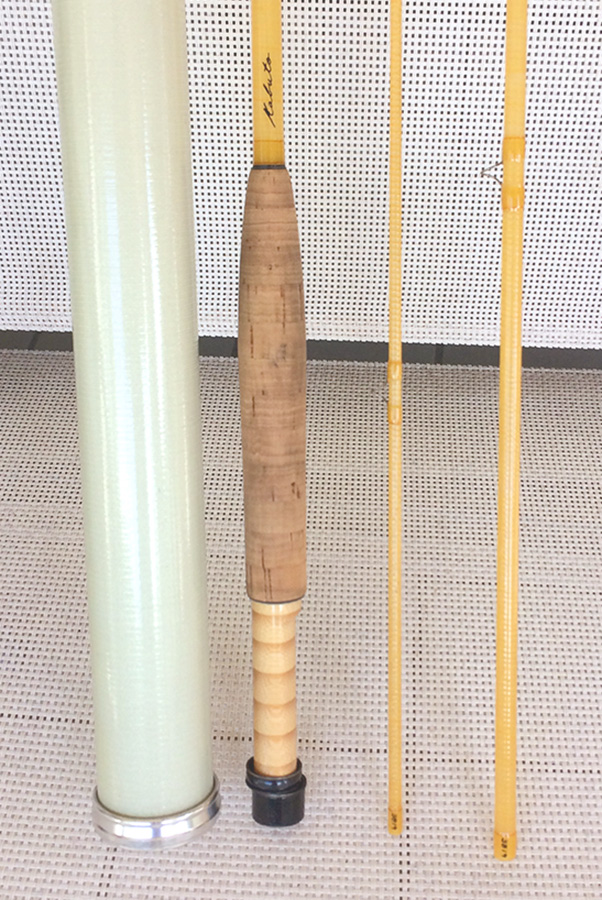
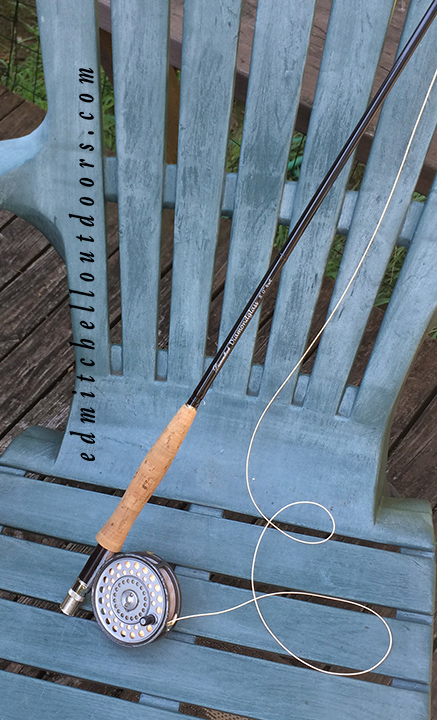
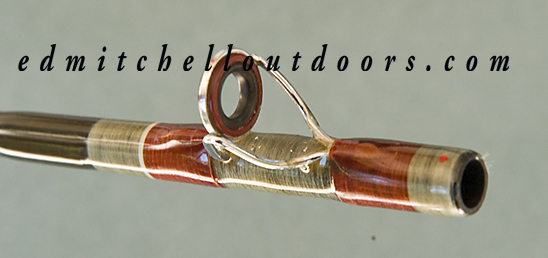
He bought a 10 foot, 2 piece, bamboo pole at Walmart. Sold under the brand name “B’n’M Pole Company 10′ Jointed Bamboo Fishing Rod” it cost a whopping 3 dollars and 35 cents. Reasonable to say the least. Then he took it home and wound on some guides. Attached a fly reel, fly line, a long leader, a heavy nymph, and set off to the stream. He tells me it works!


Posted in Fly Fishing in Freshwater, Gear | Leave a comment

Dolphins and Nets

Dolphins and Nets

This post may seem a bit odd, in that it has nothing to do with fly-fishing, kayaking, or any other outdoor sport for that matter. Still I feel compelled to write it.

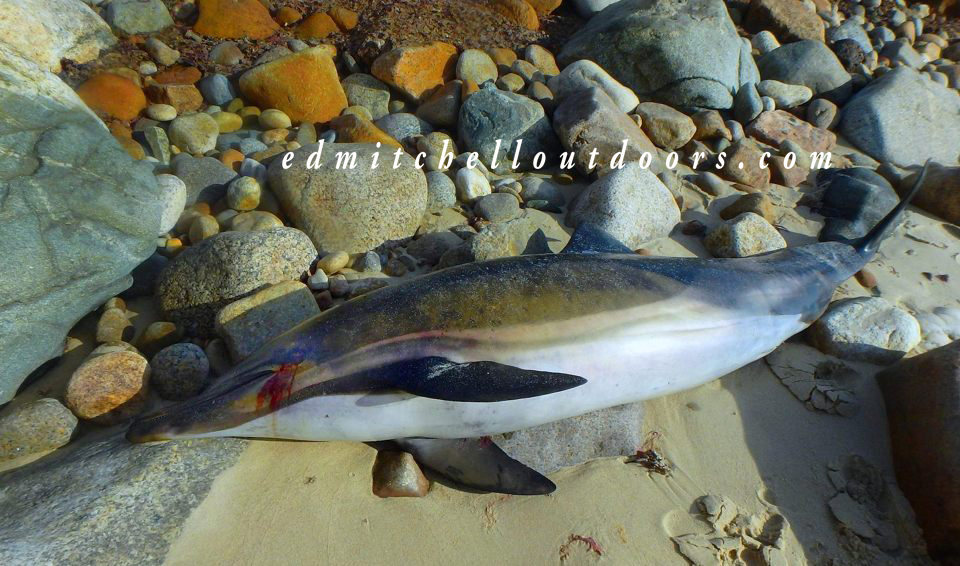
Recently my son was on Martha’s Vineyard. On a remote stretch of shore, he came across a dead dolphin. I believe it is a spinner dolphin (Stenella longirostris), at least the markings and long beak hint at that. The dolphin had no obvious signs of trauma, other than an eye poked out likely by gull. No indication it had been attacked by a shark, or hit by a boat. And that raises the very real possibility it was killed offshore in a net.

The worldwide commercial tuna fishery has killed and continues to kill an enormous number of dolphins. Studies indicate that between 1950-2018 over 4 million dolphins were caught as bycatch in the world’s tuna fishery. How does that happen? Dolphins school with tuna. Commercial fishermen realize that and set their nets around the dolphin, hoping to catch a large number of tuna as well. Obviously that has a devastating effect on the dolphins. In the Indian Ocean it is estimated that over 100,00o dolphins are caught annually as a bycatch in the tuna fishery. And that the dolphin population in that ocean has declined 90 percent!

Thankfully, here in our country  measures have been taken to greatly decrease that bycatch. Our canneries now only except tuna caught with dolphin-safe methods. And you will see that info printed on cans of tuna in the marketplace. That conservation effort has made an enormous decreased in the number of dolphins killed each year in our waters. But the number is still in the thousands.

During my years in Florida, I saw dolphins nearly every day. And I often kayaked alongside of them. They are amazing, intelligent critters, and deserve our respect.


Posted in Environment, Wild Things | Leave a comment

A Trip to the Great North Woods

A Trip to the Great North Woods

How it Looked in the pre-covid Days!

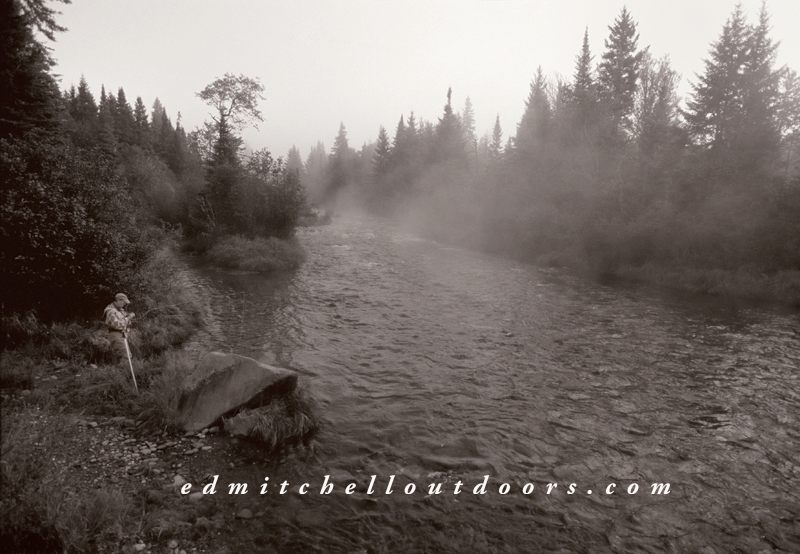
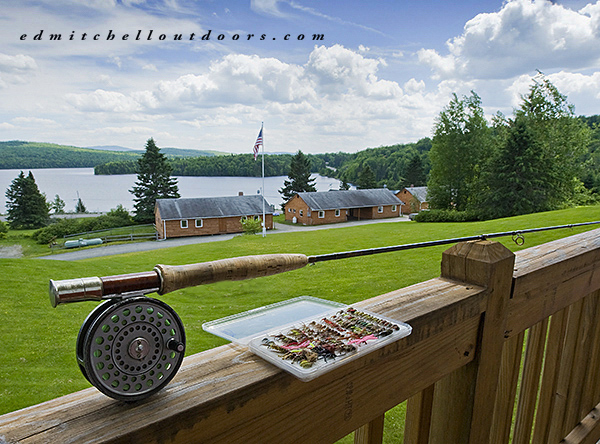
In the previous post I told you about the effect of climate change and covid on my trip north. Damn, quite a bummer. The river was overrun with anglers. Completely overrun. The photo above shows you how things looked in the past. Hopefully these saner days can return to the Great North Woods. Got my fingers crossed.

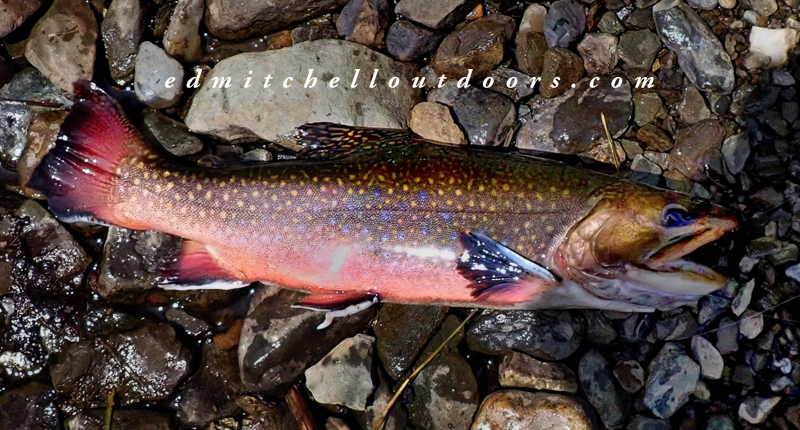
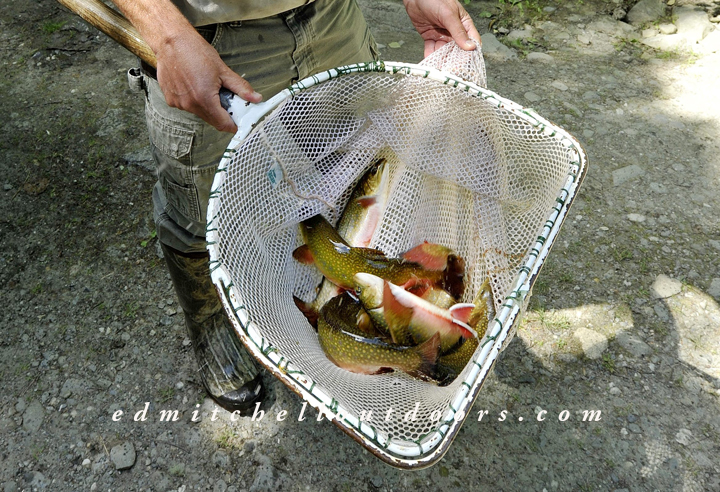
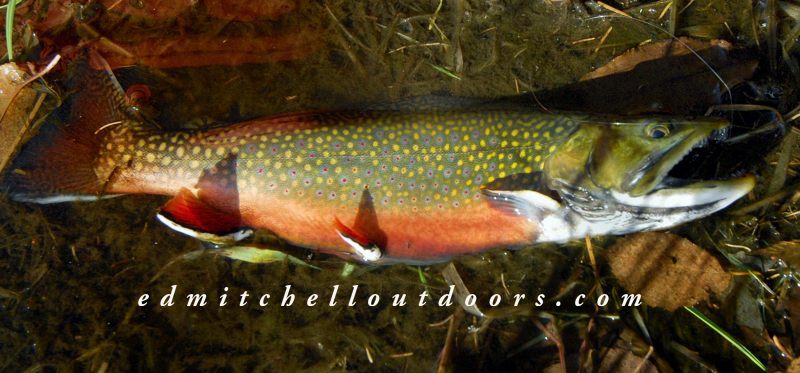
But truthfully there were some good points too. The State of New Hampshire does a wonderful job stocking the Upper Connecticut River with beautiful brook trout. The brood stock ones are three year old brookies, running upwards of 4 pounds! While we were there the state stocked, net full after net full, of brook trout in the 1.5 to 2 pound range. Gorgeous fish. Great on a fly rod.

Delivering Beautiful Brook Trout to the Great North woods

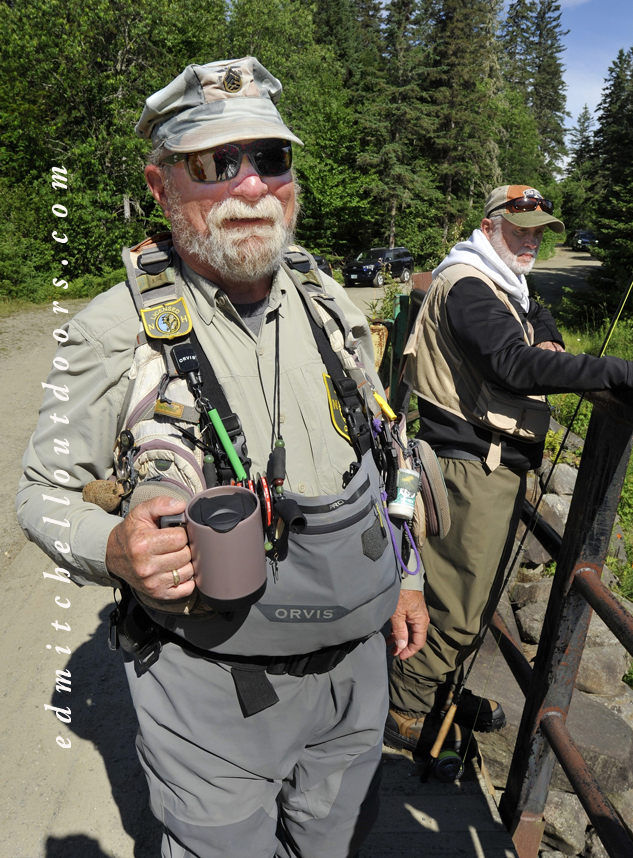
The “Bridge Commander”

No top of that the Great North Woods supplies a breathtaking backdrop of forests, mountains, moose,  and lakes. This is indeed wild country. And along with it there are some wild characters living in this hills. Such as a guy, I met on a bridge over the river. Lets call him call the “Bridge Commander”. Looks the part doesn’t he? Full of stories, jokes and spinning pure bullshit. You gotta love it. Life in the Great North Woods will do that to you.


A Great North Woods Brookie

Posted in Fly Fishing in Freshwater, On the Road | Leave a comment