The “Sulphur” Hatch on the Farmington River: Part Three

Part Three: Bright and early the following morning I stopped into Upcountry Sportfishing, located right on route 44 in New Hartford.  Upcountry is fly-fishing central in these parts. Besides being a well-run, well stocked fly shop – the kind that’s harder and harder to find these days – Upcountry has a very informative website with river reports, weather, guides, and lodging.
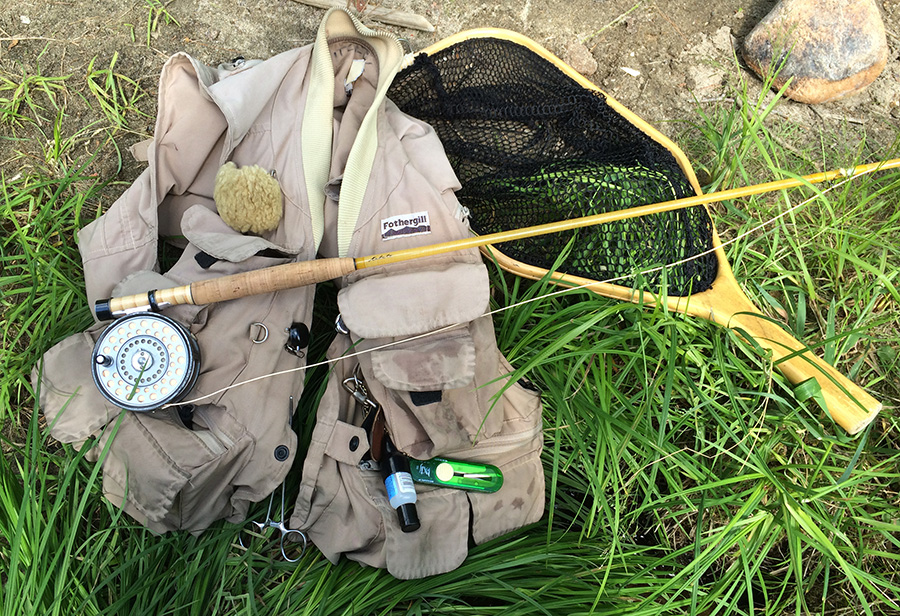
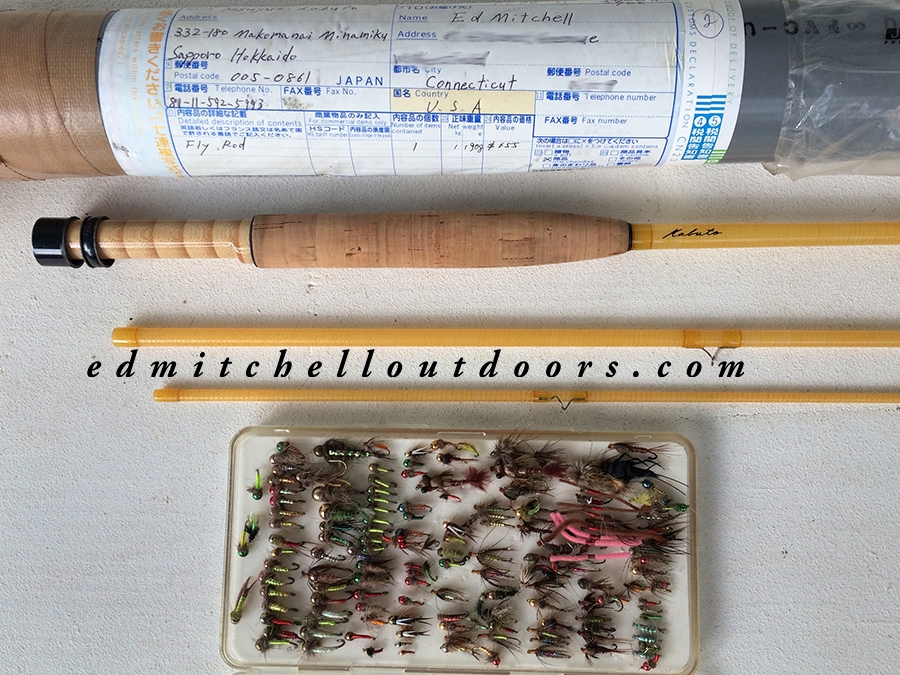
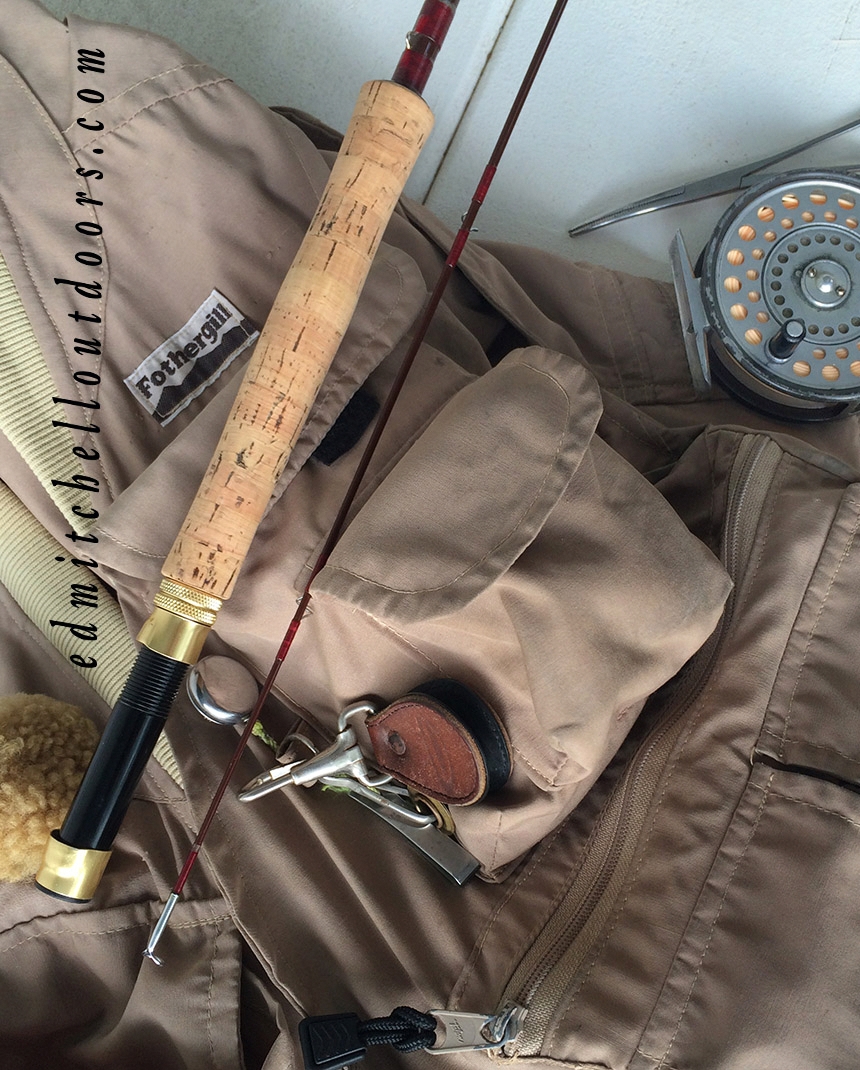
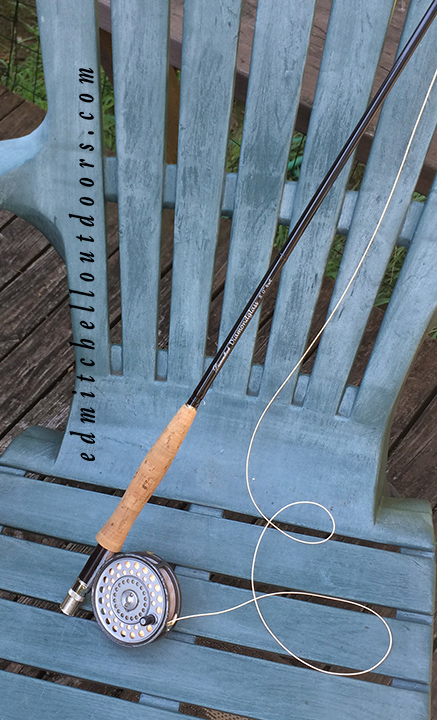
My Vest and a Kabuto Fly Rod

Vest and a Kabuto Fly Rod

In the shop I ran into Bruce Marino. Bruce has been wading these waters for years as a full-time, year-round Farmington River guide, and noted fly tyer.  Bruce quickly confirmed what I saw the previous day. He told me the “sulphurs” can come off much earlier than expected. And he added they can also come off again around 5pm. And there are even day when the “sulphurs” may wait until nightfall before appearing. In other words, the “sulphur” hatch on the Farmington River can be unpredictable.

Then I told Bruce about my lack of luck with dries. He wasn’t at all surprised. He said the trout often show little interest in the “sulphur” dun and spend much of their time keyed to the “emerger”. As Bruce put it: “It pays to get the fly wet.”

That evening I fished down river down in Collingsville with Gary Steinmiller. Gary is a highly skilled angler and president of the Connecticut Fly Fisherman’s Association. We got in around 4:30pm. There was no action to speak of until near 7pm. At that point we saw “sulphurs”, “isonychias”, and a few “cahills’ come off. This time Rick Strolis’ “shucked up emerger” worked very well indeed, taking several good fish. Gary caught several very nice trout too, including a big chunky rainbow that put up a real show, running the pool.
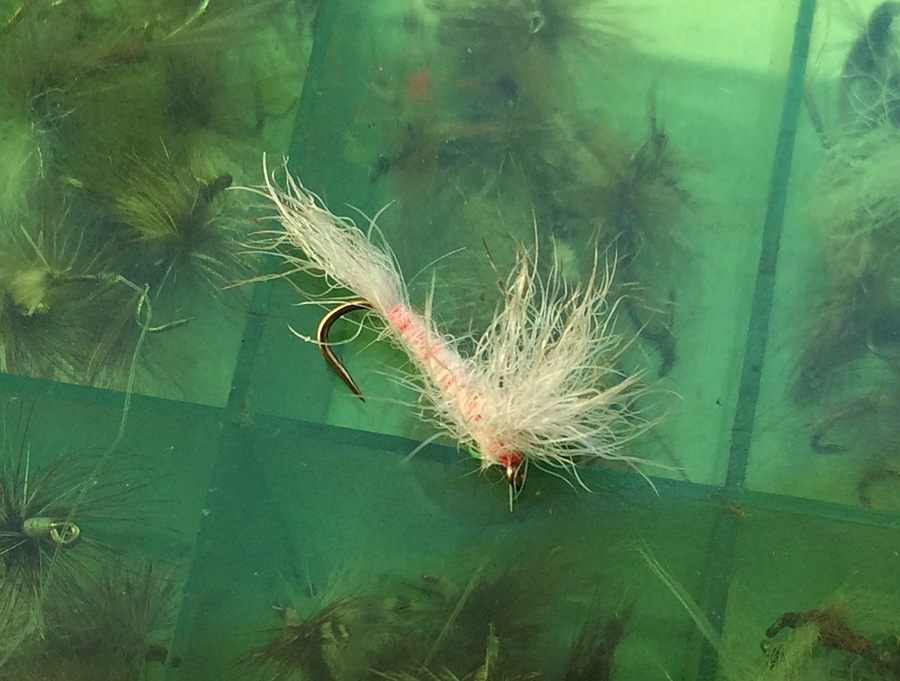
Francis Better 's Usual

Francis Better ‘s Usual – note red thread in body

As darkness descended, I was having trouble seeing the “emerger” so I switched to a Usual,  a great dry fly invented in the Adirondacks by the late Francis Betters. The Usual looks deceptively simple, but believe me it can be a killer. It rewarded me with the final fish of the night, a heavy brown of near 18 inches that bent my Kabuto glass fly rod right down into the corks. Exciting fishing!

Here’s Part Four
Posted in Flies and Fly Tying, Fly Fishing in Freshwater | 2 Comments

The “Sulphur” Hatch on the Farmington River: Part Two

Part Two: Ok, lets talk more about the “sulphur” hatch on the Farmington River. My first day on the river was filled with surprises.  Now the text book time for “sulphurs” to appear is 5pm, just as the light begins to leave the water. But rather than wait all day, I opted to get fishing just after lunch. Hey, I was anxious to see the river and anxious to wet a line.

When I got in, I saw a few caddis coming off. They were tan and about size 16.  Then around 1pm, I noticed something unexpected – “sulphur” duns begin to appear.  Seemed more than slightly early for the hatch, but the fish started moving. Wow, I felt lucky to be there.  Great I thought, here we go. I dug out a size 14 dry fly to match, and presented it above the “rises”. Believe me, my anticipation was running high. The trout continued to work, yet not one of them took my fly! Ouch. OK, I figured my presentation must be a little off, so I adjusted my angle to get a better drift. Still no dice.

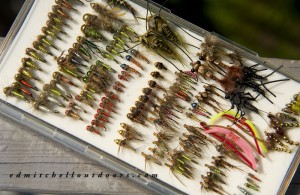
Shucked up Sulphur Emerger

“Shucked up” Sulphur Emerger

At that point I stopped and watched.  There were five trout feeding sporadically within 20 feet of me. They didn’t appeared to be large fish. Still I badly wanted to connect. After a couple of minutes, my observations paid off. Although the duns were floating right over the trout, not one dun disappeared. Instead the trout were busy immediately below the surface, taking “emergers”.

Before coming up to the river, I had bought some “emergers” from Rick Strolis. Rick is a fine fly tyer and author. The fly in question was his “shucked up”  “emerger”. I had them in size 14 1nd 16. Quickly I tied one on and bingo, sure enough, now the fish would at least come up and look at my offering. We were finally getting somewhere. Unfortunately for me, however, before I could connect, the afternoon hatch quickly petered out, without me taking a single trout. Drat. Not off to a good start!

Onward to Part Three

Posted in Flies and Fly Tying, Fly Fishing in Freshwater | 2 Comments

The “Sulphur” Hatch on the Farmington River : Part One

Part One: For many years, I was on Martha’s Vineyard in June, fishing for stripers on Dogfish bar. Those were memorable years, but as a result, I always missed the “sulphur” hatch on the Farmington River. Well this year it was high time to remedy that. So I’m spending a week fly-fishing this fabulous river, now known far-and-wide for big trout. Its finally time for me to see the “sulphurs” on the Farmington River.

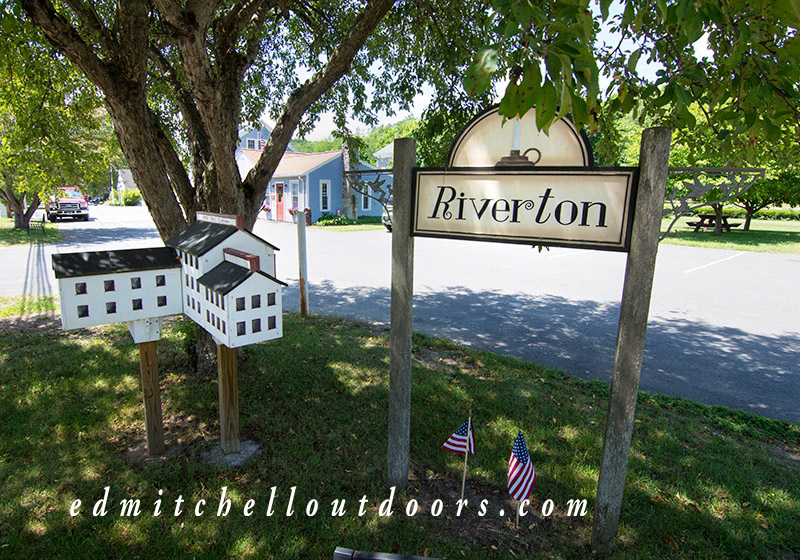
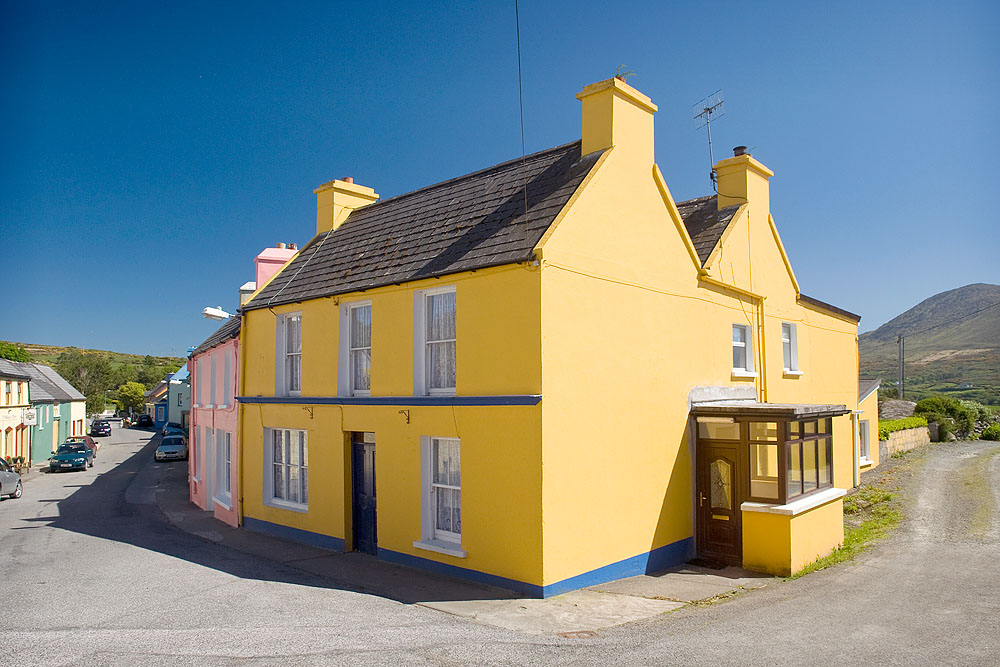
Riverton, Connecticut

Riverton, Connecticut

So, this post will be the first in a series, discussing what I encountered during my week on the Farmington. We’ll look at the daily timing of the hatch, the size of “sulphurs”, how the trout behave during the hatch, what flies were effective, and what tactics worked.

Farmington River by the old Hitchcock Chair Factory

Farmington River by the old Hitchcock Chair Factory

In case you’re unaware of this river, let me begin with some basic background. The Farmington is a tailwater fishery, the bulk of its flow originating from the Hogback Dam, which lies in northwest Connecticut right on the Massachusetts line. The dam’s bottom release ensures cool and clear waters, making ideal habitat for trout. After leaving the Hogback, the river meanders past the old Hitchcock Chair Factory, through tiny Riverton, and onward, bordered by two state forests. Miles later it reaches New Hartford, Pine Meadow, and the Canton line. These first fourteen miles of river are some of the most picturesque you’ll ever see, and were awarded Wild and Scenic status by Congress over twenty years ago.

Next the river runs through the gorge at Satan’s Kingdom as it cascades deeper into Canton, wandering into Collinsville and Farmington. These waters are, sometimes referred to as the “lower stretch”, receive less “press” and as a result less angling pressure, but don’t be fooled, they hold  fine fishing as well.

The Farmington River is home to several great hatches, but “sulphurs” rank as one of the finest. Typically, it comes-off in mid June as summer rounds the corner. Naturally, weather plays a role. Hey, it does in all forms of fishing. And the exact timing of the hatch depends on your river location. Water temperatures warm as the river runs southward. Consequently, the “sulphurs” arrive sooner in the month down in Collinsville, and then up in New Hartford, and eventually in Riverton. Hence you might want to think of this as a “movable feast” one that extends over a period of weeks, steadily ascending upstream towards the Hogback Dam.

The conservation ethic is strong here. Much of the river is catch-and-release, and you’ll need to mash down those barbs too. Given the emphasis on conservation, I’m going to opt not to drag fish ashore to be photographed. Releases will be done quick-and-easy midstream. But fear not, you’ll find plenty of pictures of Farmington River’s trout online, and you’ll see their monstrous size.

Okay here’s Part Two


Posted in Flies and Fly Tying, Fly Fishing in Freshwater, On the Road | Leave a comment

A Kabuto Fiberglass Fly Rod

In late 2005 I ordered a “glass” fly rod from Japanese custom rod builder Yasuyuki Kabuto. The wand in question was a model 7033 – a 7 foot, 3-piece, 3-weight, with a stacked bamboo slide-band reel seat.

Six months passed before the rod descended on my doorstep. Understandable given that Connecticut and Japan are half a world away, and on top of that Yasuyuki is a one-man band. But hey, anyway you cut it, the wait was well worth it. I was impressed with the rod; its a quality build, no question. Done with great care and attention to detail. Naturally I described the rod in a post shortly thereafter. Following it up with a casting report. (I’ll have more to say on casting in a minute.)

A Kabuto Fiberglass Fly Rod

A Kabuto Fiberglass Fly Rod

Regrettably,  back then I was unable to fish the rod very much. How come? Well I moved to Florida and spent the intervening years fishing the flats. Ton of fun that. This summer I’m in New England, however, and fishing this “glass” rod often. Hence the time is ripe for an update on a Kabuto fiberglass fly rod.

A Kabuto Fiberglass Fly Rod

A Kabuto Fiberglass Fly Rod

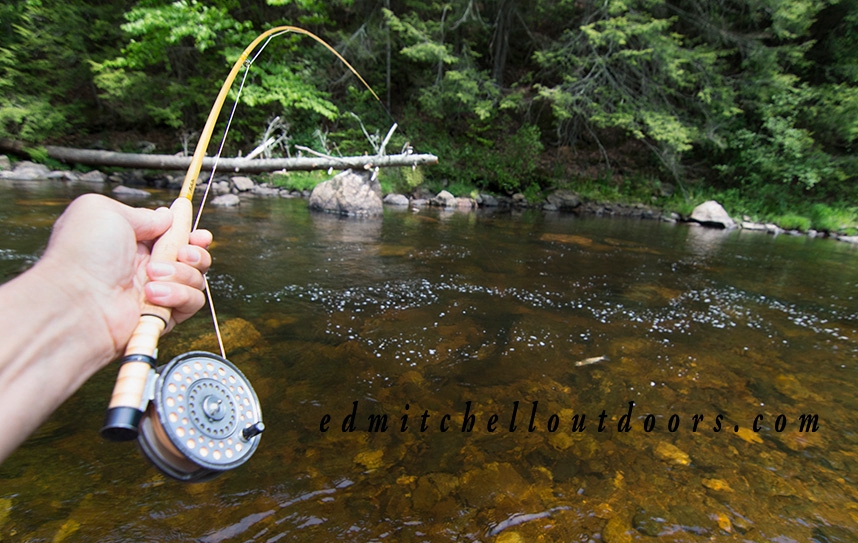
Here’s the Kabuto at work on Connecticut’s Salmon River. If you look closely, on the right third of the photo just below the foam line, you’ll see a rainbow trout with its head down, boring for the bottom. No, its not huge fish, a foot or so, but a fun fish on this “glass” rod.

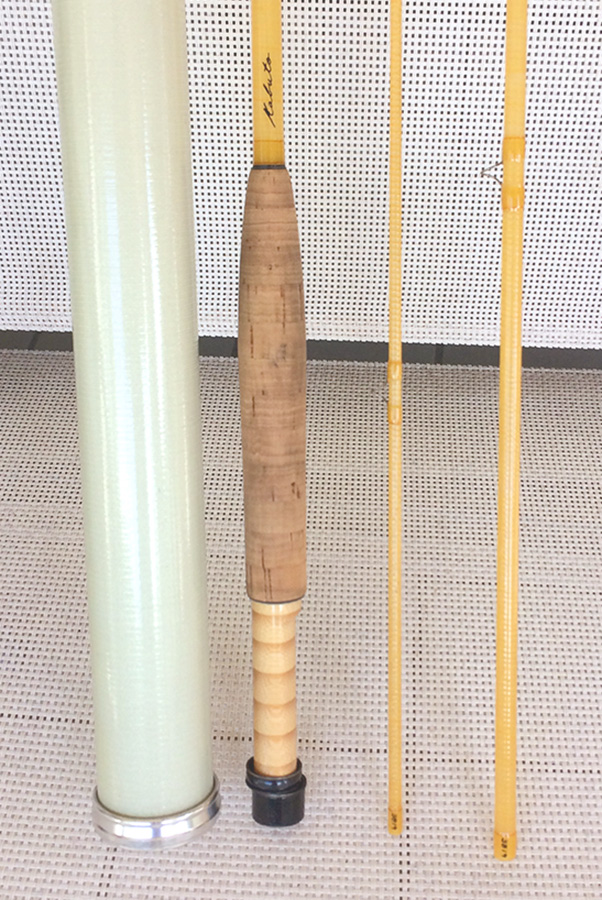
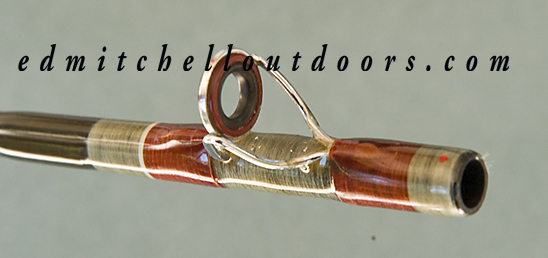
The Kabuto 7033 tips in at 3.35 ounces, reasonably light. The blank is unsanded. The finish is Spartan and yet impeccable, clearly the work of an artisan. A single agate stripping guide adds grace. All wraps are transparent, tipped in a few turns of yellow. There is no hook keeper. The grip is nicely shaped and made with some of the highest quality cork I’ve ever seen. It measures 5 5/8″. As the photograph above reveals, it is a tad short for my mitt. Still it might fit your hand just right. The photo also show the rod’s progressive action. Which is uniform down to and a bit below the stripping guide. Beyond that, the butt has oodles of reserve power.

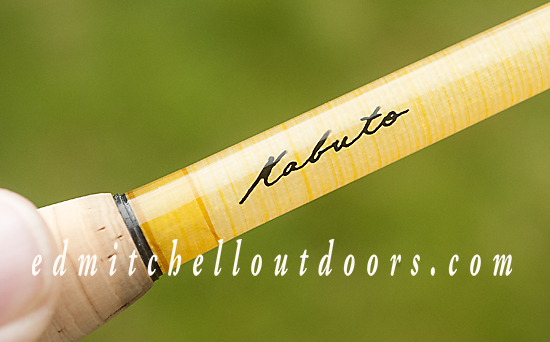
Kabuto Signature

Kabuto Signature

OK…lets talk turkey..I mean casting. Back when I first tested this rod I didn’t have a 4-weight line to try. But given how the 3-weight Kabuto handled a 5-weight line, I realized a 4-weight was undoubtedly an option. Now I have a 4-weight – a Cortland 444 DT – and have been using it extensively. Honestly, in my hands, the 4-weight out performs the 3-weight by a long shot. I’m just telling it like it is. With a 4-weight line, the rod simply loads better, responds better, and feels more comfortable. Obviously your mileage may vary.

You can’t go down to your local fly shop and wiggle one of these things. So I was taking a chance on this rod. But I’m glad I did. I’m very pleased, and plan to enjoy this rod for years to come. It casts smoothly, roll cast well, and can chuck out serious line if needed. Did I mention it’s also a great looking rod? You’re damn right it is.

Interested in reading about other Winston Fiberglass  fly rods?  Check out these links. Winston 2wt Stalker, Winston 5wt , Winston 6wtWinston 8wtWinston 1owtWinston 12wt

Posted in Fiberglass Fly Rods, Fly Rods | Leave a comment

Winston 5-Weight Fiberglass Fly Rod: Part Two

Part Two:  At the end of the last post, I showed you page 13 from a Winston Catalog printed during Doug Merrick’s era in San Francisco. On that page, there is mention of a series of rods under the heading of R.L. Winston Ultra-light Fiber Glass Trout Rods.  There are five rods in this series ranging from 5 1/2 foot to 7  1/2. All are rated for 5DT fly lines! My rod must be part of that series. It has a down-locking reel seat. Interestly enough this rod was also available with a cork reel seat. With cork the rod was said to tip in at 2 1/8 ounces!!! Astounding.

SF Winston with Vest 022

Winston 5-Weight Fiberglass Fly Rod

Ok lets test it. A 2-weight was the first line I tried. The rod was able to cast it, but the rod definitely felt underlined. Next aboard was a 3-weight. Pretty much the same deal. I could cast it, yet the rod wasn’t working down into the blank. But the news here is this: if you were in a tough situation that demanded extreme stealth, these lines could be used.

OK…on to a 4-weight line. Nicer,…. much nicer. It loaded the rod well, and cast well. I liked it. A 4-weight line is  a useful companion for this rod.

A 5-weight line, slowed the rod farther, tapping more into the power of the butt section. Now you had that sought after “glass ” feel.  ( I’ve been known to refer to “glass” as “blue-collar bamboo”.) Yes, the jury is in. This is a classic 5-weight. The 5-weight line’s greater weight also allowed me to deliver a fly with a minimum of fly line out the tiptop. Did I try for maximum distance? Frankly I didn’t. This old rod is in fabulous shape and didn’t need me pushing it. Still I’m comfortable in saying it will fish out to 35 feet and beyond, covering the vast majority of trout situations.

A few final thoughts. A 2.6 ounces, this rod is wonderful in the hand, light, responsive and accurate. You can’t ask for anything more. When I stack the rod up against my Montana “glass” rods it is easy to see the improvements Tom Morgan made. The later rods have better components, and better finish. Along the way, I noticed that this reel seat has some limitations. It accepts the Hardy Lightweight series, but reels with fatter reel feet are a no-go. Unfortunately this is true on many rods, even today. Reel seats are simply not universal.

Posted in Fiberglass Fly Rods, Fly Rods | 2 Comments